Chinatown’s Food Identity in a Changing City
Singapore’s Chinatown has always been shaped by change. In 2026, that change is visible in every meal: elderly hawkers still preparing recipes by memory, younger stall owners using digital payment systems, chefs turning heritage ingredients into contemporary plates, and travelers using food as their way into the neighborhood’s history.
For background, the official tourism reference for the area is Visit Singapore’s Chinatown page at https://www.visitsingapore.com/see-do-singapore/places-to-see/chinatown/. It presents Chinatown as a cultural precinct, which is important because the dining scene here cannot be separated from architecture, temples, markets, and conserved shophouses.
Hawker Food as the Foundation
The Role of Chinatown Complex
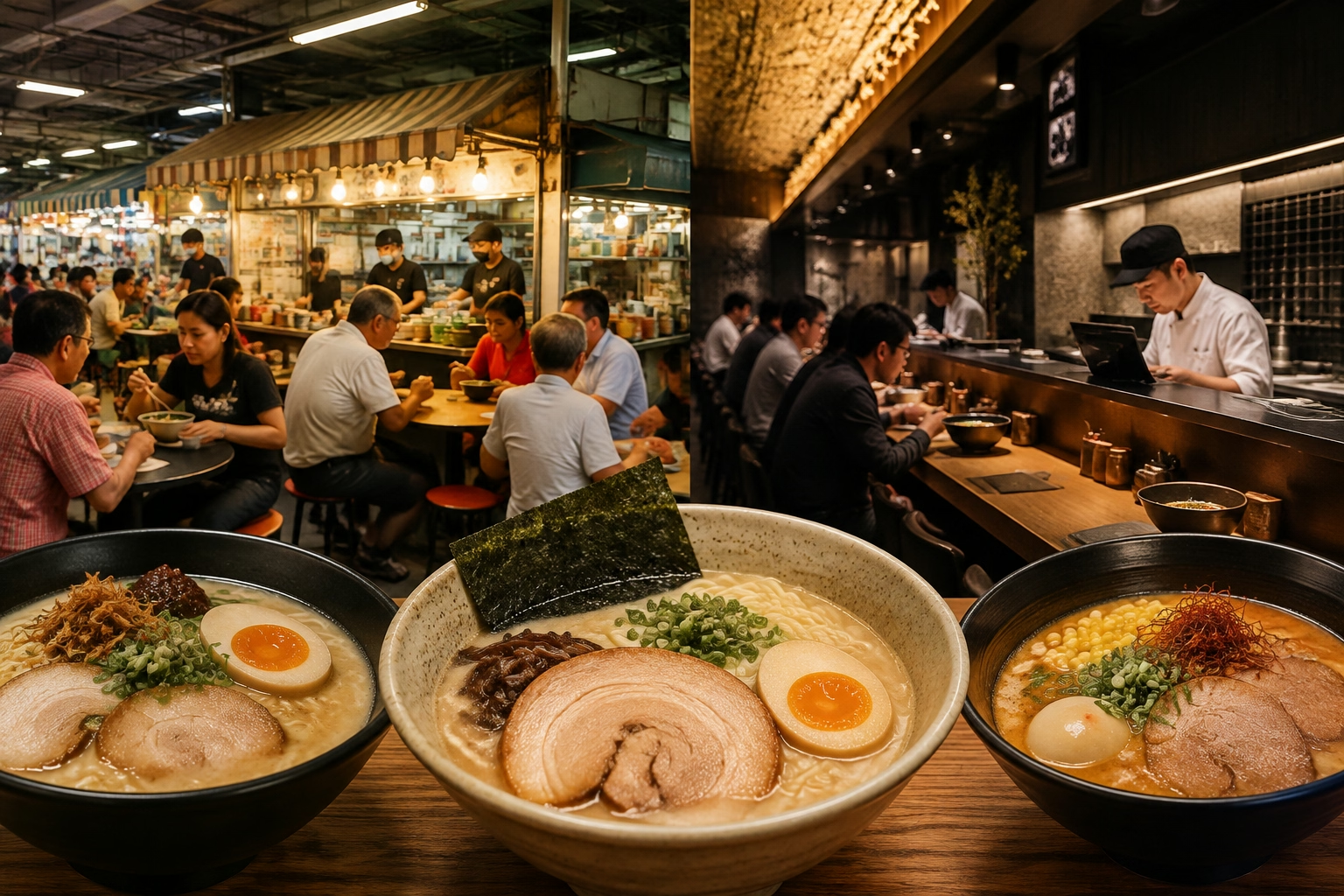
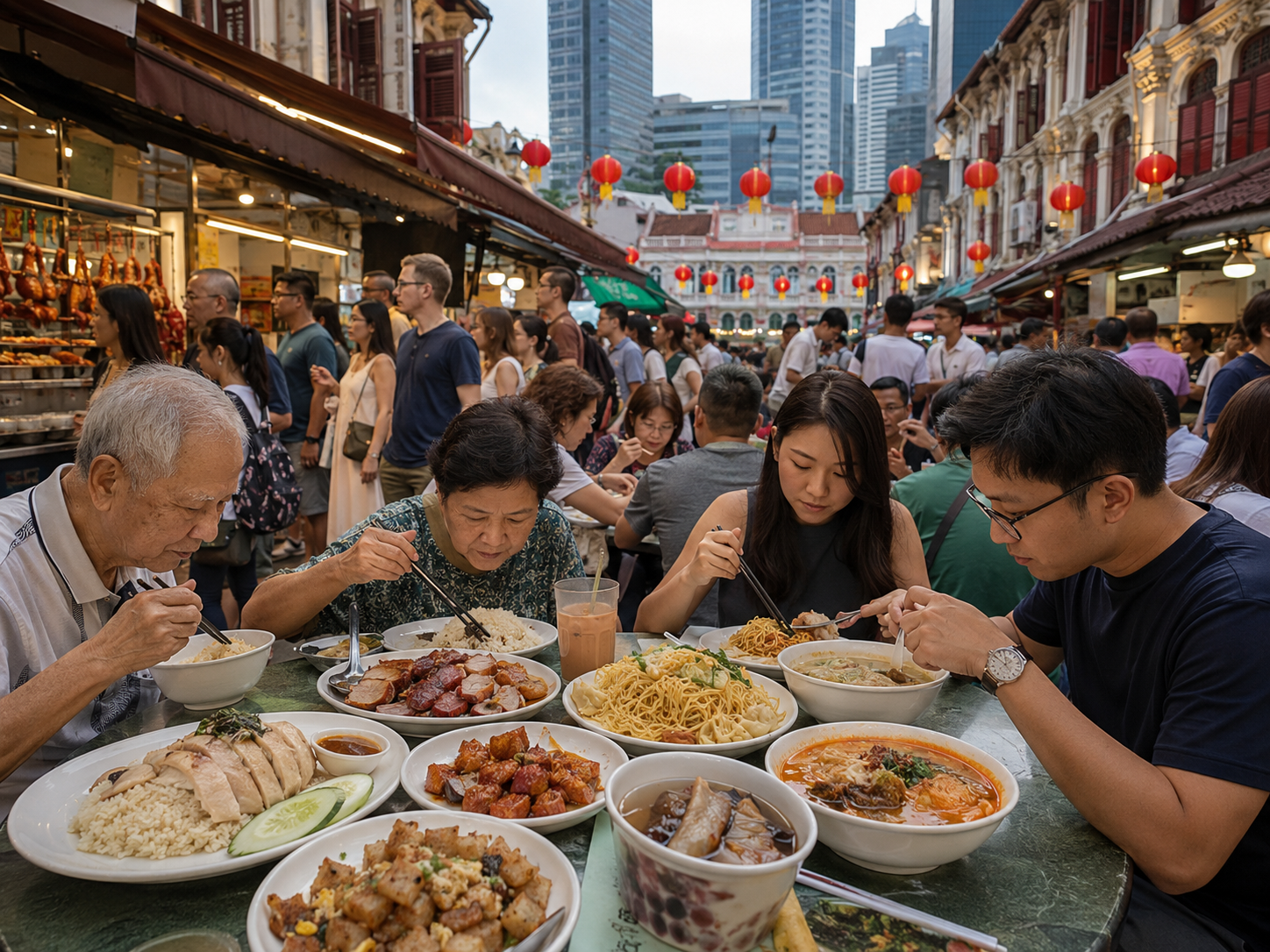
Chinatown Complex Food Centre remains a cornerstone of the neighborhood’s culinary reputation. It is not polished in the way luxury dining rooms are polished, but that is precisely its value. Its strength lies in concentration, variety, and social authenticity. Travelers can find rice dishes, noodles, soups, desserts, roasted meats, and snacks under one roof.
The most meaningful way to approach the centre is to see each stall as a specialist. A good hawker may spend decades perfecting broth clarity, noodle texture, roasting temperature, chili paste, or rice fragrance. This kind of specialization is why Singapore’s hawker food continues to attract global attention.
Signature Dishes and What They Reveal
Chicken Rice and the Discipline of Simplicity
Chicken rice is often described as simple, but that description hides the labor behind it. The bird must be cooked gently, the rice must absorb aromatics without becoming greasy, and the chili must brighten the dish. In Chinatown, soy sauce chicken and other Cantonese-influenced variations add deeper color and a braised flavor profile.
Wok-Fried Staples and Noodle Culture
Char kway teow, fried carrot cake, Hokkien-style noodles, wanton mee, and fishball noodles all show how central texture is to local eating. A dish can fail if the noodles are too soft, the wok is not hot enough, or the sauce lacks balance. These are not minor details; they are the difference between a forgettable meal and a memorable one.
Desserts, Tea, and Bakery Traditions
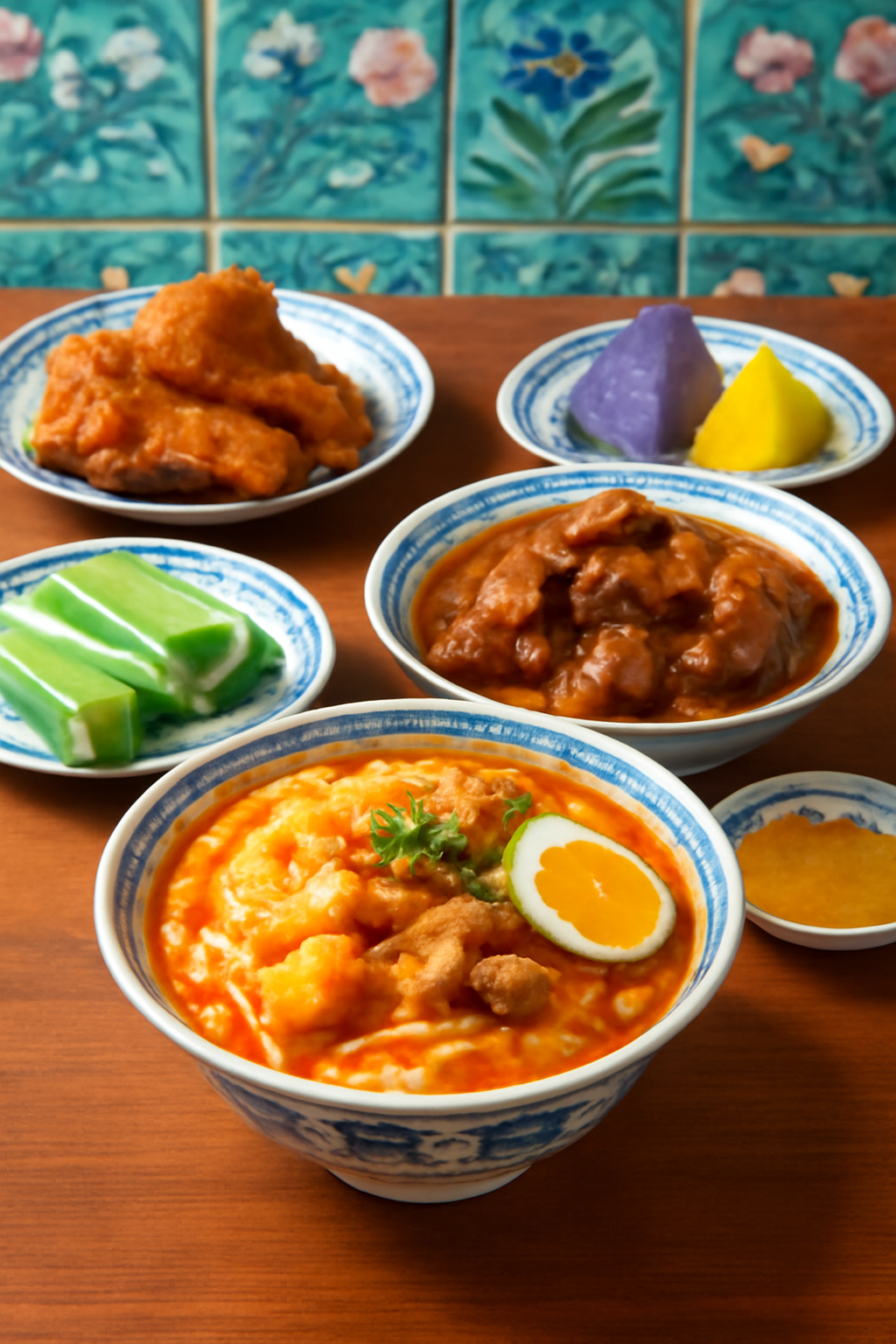
Chinatown’s quieter food culture deserves attention. Traditional bakeries, dessert stalls, and tea houses preserve slower forms of eating. Egg tarts, herbal jelly, almond paste, and sesame desserts offer a counterpoint to the speed of hawker lunches. They also appeal to travelers seeking cultural depth rather than only large meals.
The Contemporary Layer: Keong Saik, Ann Siang, and Beyond
By 2026, the area around Keong Saik Road, Ann Siang Hill, and Club Street has become a strong part of Chinatown’s dining story. Contemporary restaurants and bars bring a different audience into the district. Some venues use regional Asian ingredients in modern formats, while others turn restored shophouses into atmospheric dining rooms.
This creates a compelling contrast. Chinatown is now both a heritage food zone and a lifestyle dining district. The challenge is ensuring that modern growth does not reduce traditional food to decoration. The most responsible restaurants and food businesses are those that acknowledge the neighborhood’s history rather than using it only as a backdrop.
Smart Food Route for Visitors
A practical 2026 route should combine old and new. Start with a hawker breakfast or early lunch, visit cultural landmarks between meals, stop for a traditional pastry or tea, then explore a contemporary restaurant or bar in the evening. This approach gives visitors a fuller picture of Chinatown’s food life.
The district’s appeal lies in its range. A single day can include a humble bowl of noodles, a heritage dessert, a roasted meat plate, and a modern Asian dinner. That density makes Chinatown one of Singapore’s most useful culinary maps.