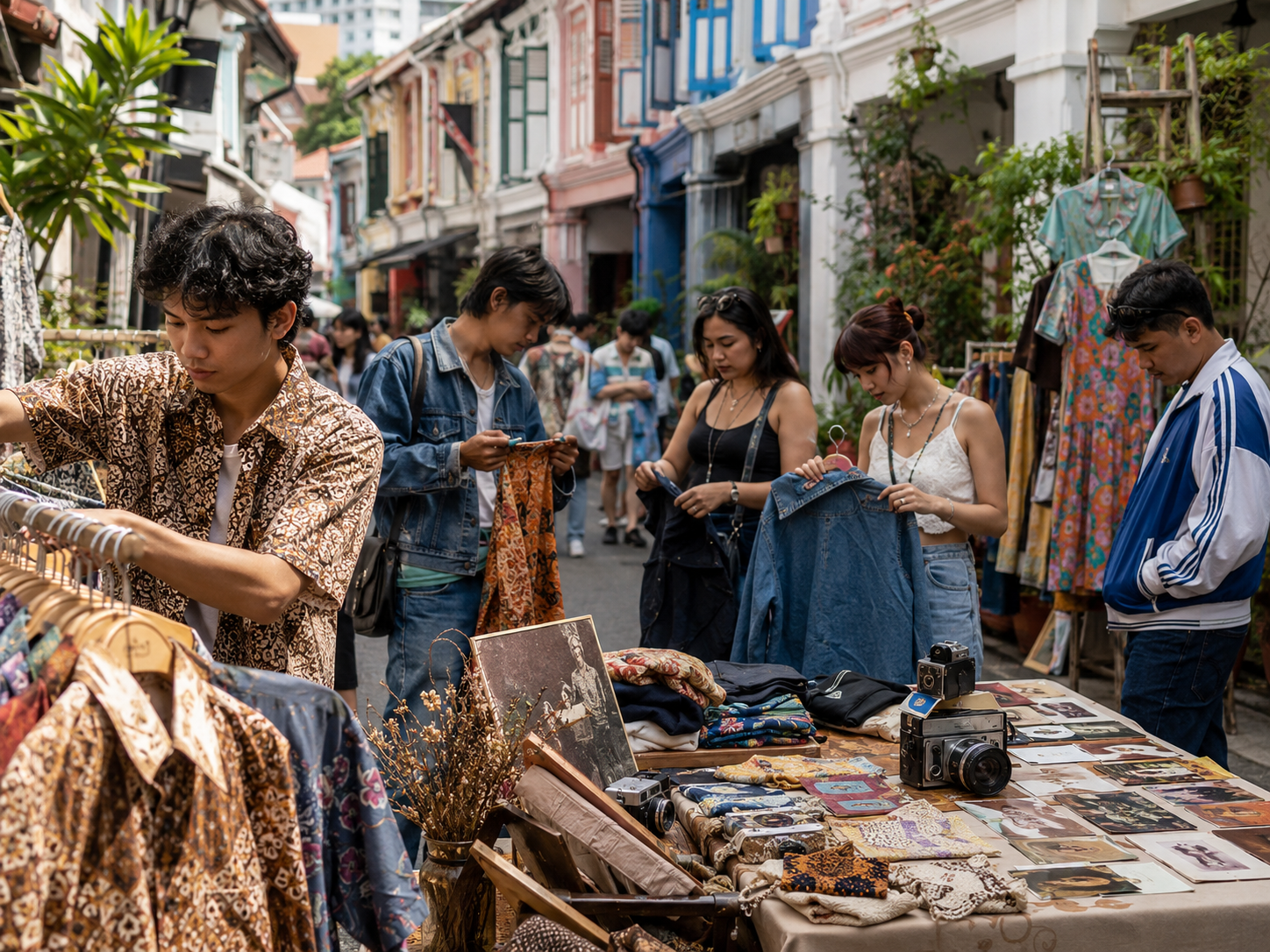
In a city-state where land is scarce and incineration is the default fate for most waste, vintage fashion has taken on urgent environmental significance. By extending the life of clothing, Singapore’s retro fashion community is helping to reduce the 202,000 tonnes of textile and leather waste generated annually, according to the National Environment Agency’s 2026 waste statistics (nea.gov.sg).
The Environmental Cost of Fast Fashion
Fast fashion has made clothing cheap, disposable and environmentally costly. Singapore lacks large-scale textile recycling infrastructure, so most discarded clothing is incinerated. Vintage fashion offers a direct counterweight: every secondhand garment purchased is one fewer item in the waste stream. Environmental advocates argue that reuse should be the first line of defence, before recycling or disposal.
Thrift Stores as Circular Economy Hubs
Thrift and vintage stores across Singapore are increasingly framing themselves as circular economy hubs. Outlets such as The Fashion Pulpit and Swapaholic host clothing swaps, repair cafés and rental programmes. These spaces measure their impact not only in revenue but in kilograms of clothing diverted from incineration. In 2026, several stores began publishing monthly diversion reports to build consumer trust and accountability. This transparency helps shoppers see the tangible environmental effect of their purchases.
Repair and Upcycling as Core Practices
Beyond resale, the vintage community is embracing repair and upcycling. Workshops on sashiko mending, invisible darning and denim restoration have become popular at community centres and independent boutiques. These practices challenge the idea that damaged clothing is worthless. By extending the life of a garment by even nine months, a consumer can reduce its carbon, water and waste footprint by up to 30 percent, according to circular fashion research cited by local sustainability groups.
The Role of Rental and Shared Wardrobes
Rental platforms are also growing. Instead of buying a vintage dress for a single event, consumers can rent it for a fraction of the retail price. This model reduces demand for new production while allowing more people to experience designer vintage. In Singapore, rental services have expanded from formal wear to everyday office attire and occasion-specific retro pieces. Shared wardrobes, where groups of friends or communities pool their clothing, are also gaining traction.
From Guilt to Agency
The vintage sustainability movement in Singapore is careful not to rely on guilt. Instead, it promotes agency: the idea that individual wardrobe choices can collectively shift the fashion system. By choosing secondhand, repairing rather than replacing, and participating in swaps, consumers become active participants in waste reduction. This positive framing has attracted a broad demographic, from students to retirees, and has helped the movement grow beyond a niche environmentalist audience.
As Singapore works toward its zero-waste ambitions, vintage fashion is emerging as one of the most accessible and culturally resonant ways to practise circular consumption.