Singapore is often celebrated as one of the great food destinations in Asia, and that reputation is built on more than delicious dishes alone. The country’s cuisine is compelling because it reflects a long process of cultural interaction among different ethnic groups. Chinese, Malay, Indian, and Peranakan communities have all shaped the ingredients, methods, and flavor combinations found in Singaporean food. What emerges from this interaction is not a random mixture, but a highly developed culinary culture in which diversity becomes a source of harmony.
To understand Singaporean cuisine, it is helpful to begin with the country’s history as a meeting point. People from different parts of Asia settled in Singapore for trade, work, and family life. They brought familiar food traditions with them, but those traditions changed as they adapted to a new environment. Ingredients available in local markets influenced cooking choices, while daily contact with neighboring communities encouraged experimentation. In this setting, food became one of the clearest expressions of cultural exchange.
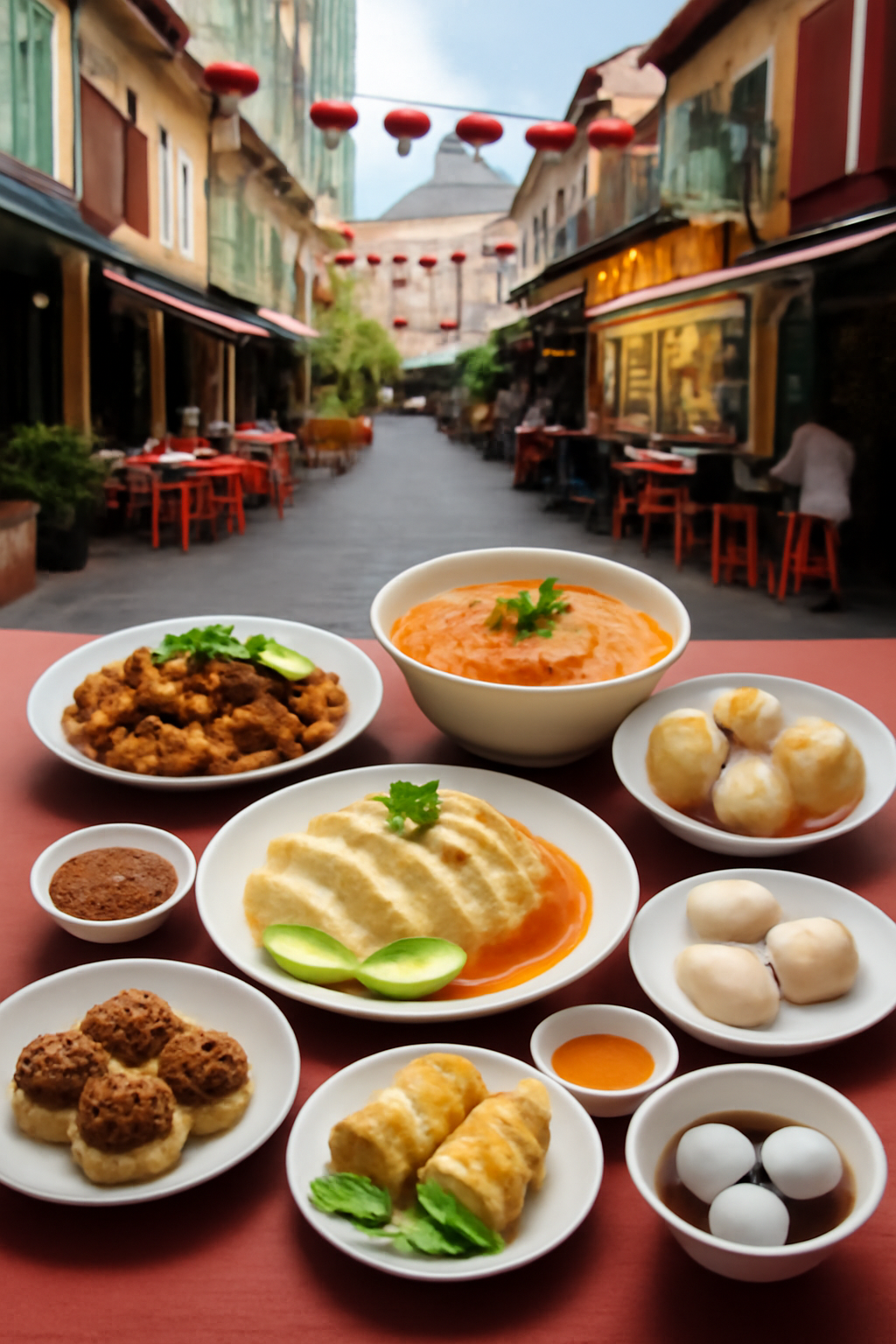
Chinese influence is broad and foundational. Various Chinese subgroups contributed distinctive culinary styles, making the local food scene especially diverse. Stir-frying over high heat, preparing delicate broths, roasting meats, and serving rice and noodles as daily staples are all practices strongly tied to Chinese heritage. Hainanese chicken rice remains one of the most iconic examples. Its appeal lies in what seems simple but is actually very precise: tender poached chicken, fragrant rice cooked in stock, and sauces that sharpen and complete the dish. Chinese traditions also helped establish the importance of texture, balance, and freshness in many meals.
Malay cooking adds aroma, heat, and a deep sense of regional flavor. It often relies on ingredients such as coconut milk, chili, turmeric, galangal, and fragrant leaves to create dishes with strong personality. Sambal plays an important role, adding intensity and depth to many foods. Nasi lemak, for instance, may appear straightforward, but its success depends on the relationship between rich coconut rice, spicy sambal, crunchy anchovies, and cooling cucumber. Satay reveals another Malay contribution: a love of grilled foods served with sauces that combine savory, sweet, and nutty notes.
Indian food culture expands Singapore’s flavor range through spice layering and bold seasoning. Curries, biryanis, lentil dishes, and breads became part of local eating habits through the presence of Indian communities, especially South Indian and Indian Muslim groups. Roti prata is perhaps one of the best examples of how these traditions entered everyday Singaporean life. Crispy on the outside and soft inside, it is both comforting and versatile. Indian influence also appears in dishes such as murtabak and fish head curry, where local preferences and Indian culinary methods come together in memorable ways.
Peranakan cuisine stands at the heart of Singapore’s multicultural food identity because it developed directly from cultural blending. It combines Chinese techniques with Malay ingredients and spice traditions, producing dishes that are layered, rich, and highly distinctive. Laksa is a strong illustration of this. The dish combines noodles with a spicy coconut-based broth, often enriched by seafood or other toppings. It feels comforting and bold at the same time, which is one reason it has become so closely linked with Singaporean food culture.
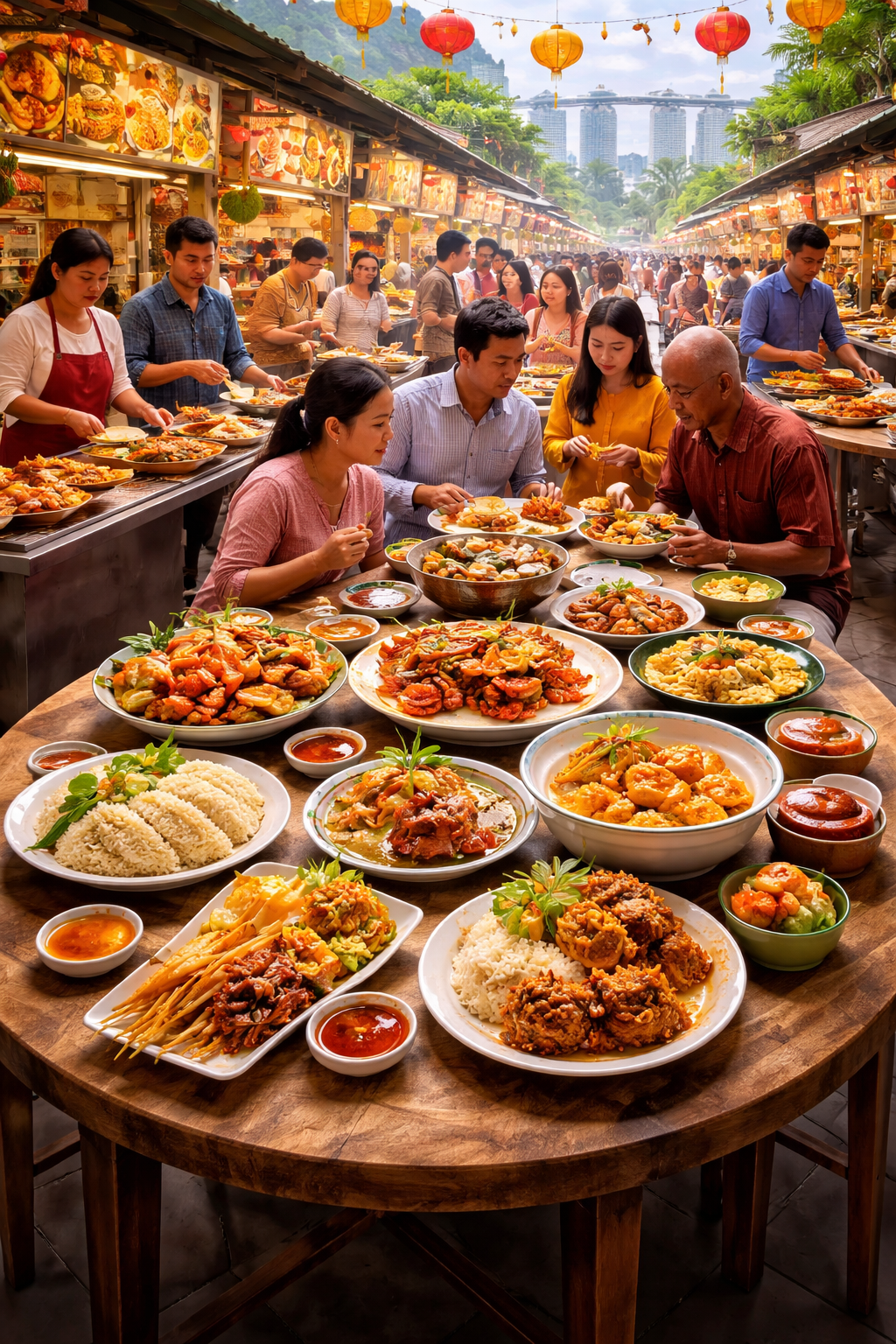
The social setting of hawker centers gives these culinary traditions a common home. In these spaces, food from different ethnic backgrounds is not separated by rigid boundaries. It is presented side by side, chosen according to craving rather than ethnicity, and enjoyed by a mixed public. This environment allows culinary traditions to remain visible while also making them part of a shared everyday experience.
Singaporean cuisine is remarkable because it turns diversity into flavor. Every ingredient, technique, and dish carries traces of community history. Together, these influences create a food culture that is not only varied and satisfying, but also deeply expressive of the society that produced it.