The Regional Fan Economy
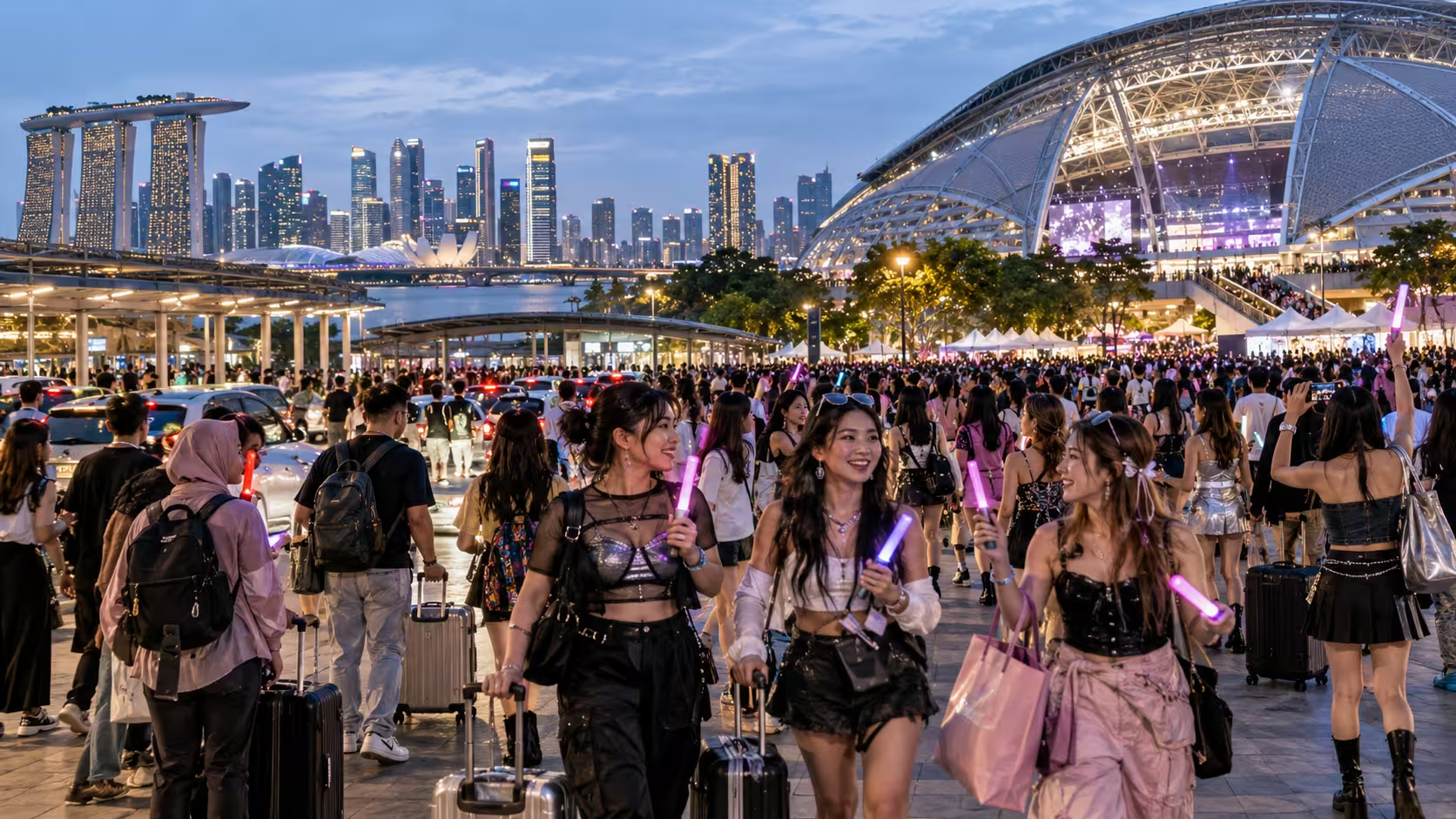
Singapore’s concert audience is no longer purely local. According to 2026 data, 59 per cent of concertgoers in the Asia-Pacific region have travelled to see a show, and many extend their trips for sightseeing, dining, and shopping. That behaviour has turned major concerts into multi-day tourism events, with the ticket as the entry point to a broader spending chain. When BTS announced four December 2026 shows at the National Stadium, hotel bookings through Trip.com for the concert period increased by more than 18 times, while accommodation searches surged.
Why This Matters for Ticketing
Every travelling fan is an additional competitor in the queue. A Singaporean fan competing for a seat is now competing not only against other locals but against fans from Malaysia, Indonesia, the Philippines, Thailand, and beyond. That expanded demand pool makes desirable tickets scarcer and raises the value of any service that can improve a fan’s odds. Help-to-Buy (HTB) providers are, in effect, selling access to a queue that has become regionalised.
The Economic Stakes
The financial impact of concert tourism is substantial. DBS economist Chua Han Teng estimated that the four BTS concerts could add around S$200 million to Singapore’s tourism receipts in the fourth quarter of 2026, while Maybank economist Chua Hak Bin offered a higher estimate of about S$300 million. Some Singapore properties reported hotel bookings rising by almost 50 times for the concert period.
The Three-Day Fan Economy
A concert ticket triggers a sequence of spending: flights, airport transfers, accommodation, meals, local transport, merchandise, and attractions. A fan who flies in for one night may stay three or four nights, turning a single event into a mini-holiday. That multiplier effect gives hotels, restaurants, and retailers a direct stake in concert demand—and indirectly, in the ticketing ecosystem that determines who gets in.
How HTB Benefits from Tourism Demand
HTB providers do not create tourism demand, but they monetise its side effects. Travelling fans often cannot commit to a ticketing day because of time-zone differences, work schedules, or unreliable internet access. An HTB service allows them to delegate the purchase while they arrange flights and accommodation. The fee is absorbed into the overall trip budget, making it easier to justify than it would be for a local fan buying a single ticket.
The Pricing Effect of Cross-Border Demand
When demand is regional, HTB fees can be priced against a regional willingness to pay. A fan from a neighbouring country may find a S$200 proxy fee reasonable if the alternative is a wasted flight and hotel booking. That willingness to pay pushes fees upward for everyone, including local fans who are not travelling. The BIGBANG sale in August 2026 illustrated this dynamic: a single National Stadium date attracted massive queue numbers and HTB fees of up to S$750, partly because the fanbase extended across the region.
The Infrastructure Strain
Concert tourism also strains the infrastructure that ticketing depends on. High traffic volumes can slow official platforms, increase the frequency of queue errors, and create more opportunities for HTB providers to differentiate themselves through technical reliability. A provider with a stable connection and multiple devices has an advantage that a casual fan on a mobile phone does not. That advantage is the product.
The Destination-Marketing Angle
Tourism authorities increasingly view major music events as destination assets rather than isolated entertainment products. If Singapore continues to attract regional concerts, the HTB market will grow alongside it. The city-state’s aviation connectivity, accommodation capacity, and event infrastructure make it a natural hub for concert tourism, and that hub status intensifies ticketing competition in ways that local-only markets do not experience.
A Self-Reinforcing Cycle
Concert tourism and HTB services reinforce each other. Tourism increases demand, demand increases queue difficulty, and queue difficulty increases the value of proxy services. The cycle is not inherently negative—it reflects a vibrant live-entertainment market—but it does concentrate risk on fans who cannot afford premiums or navigate informal providers. As Singapore positions itself as a regional concert capital, the HTB economy will remain a visible and contested part of the ticketing landscape.