A 3 Per Cent Recycling Rate Is the Backdrop
Any serious discussion of upcycled fashion in Singapore must begin with the scale of the problem. In 2025, the country generated 231,000 tonnes of textile and leather waste. Only 6,000 tonnes were recycled—3 per cent—while 225,000 tonnes were disposed of, overwhelmingly through incineration. These figures, published by the National Environment Agency, place textile waste in the same order of magnitude as food waste and plastics, yet textile recycling infrastructure remains far less developed. The Ministry of Sustainability and the Environment has acknowledged that textile recycling is “challenging due to the highly varied materials and fibre blends used” and that most collected textiles are resold or reused in overseas markets because local processing capacity is limited.
Where Saris Fit Into the Picture
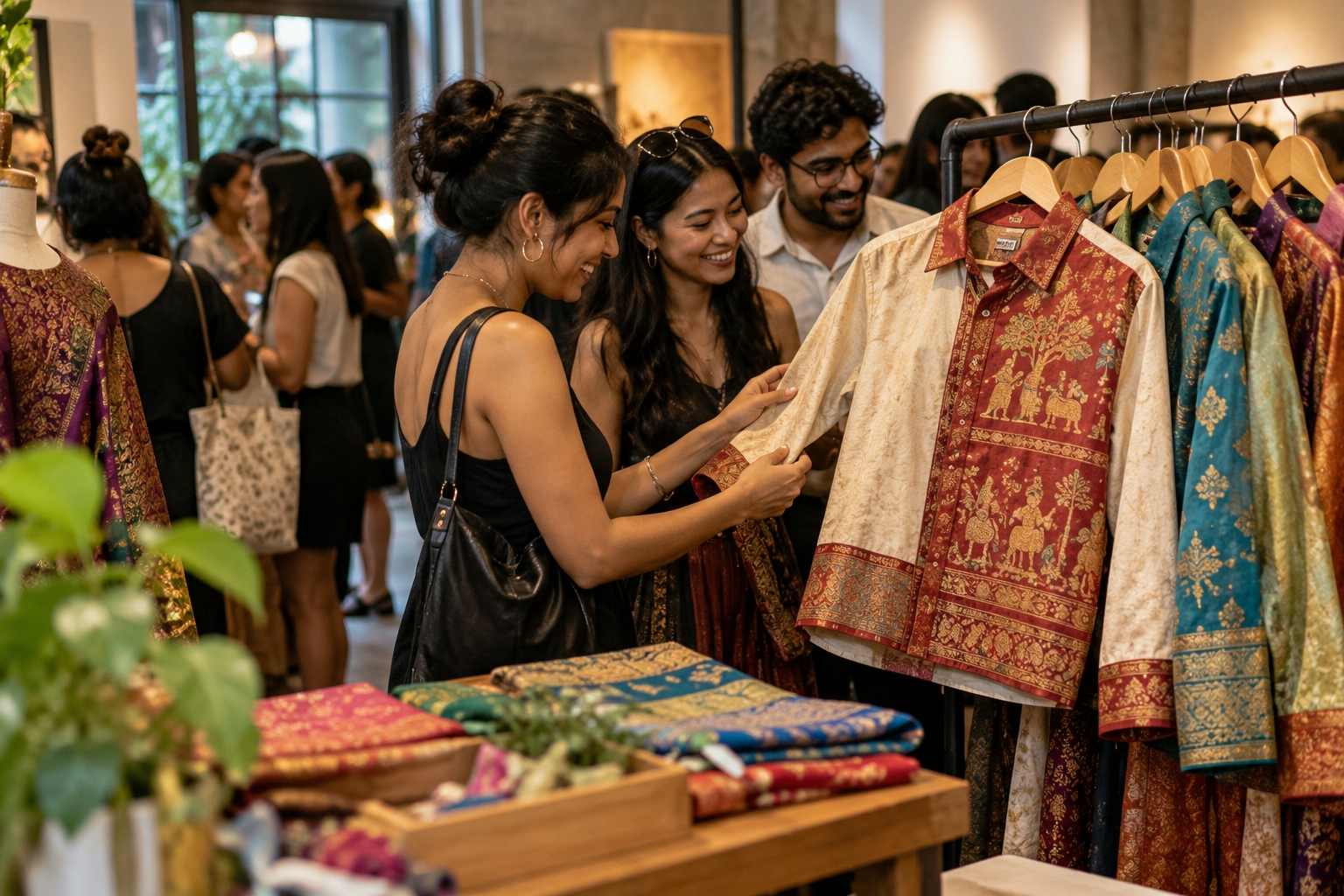
Saris occupy a peculiar position within this waste stream. They are typically made from natural fibres—silk, cotton, or blends—and often carry significant artisanal labour. Discarding a sari is not the same as discarding a worn-out polyester T-shirt; the garment may be decades old but materially intact, with embroidery and weaving that cannot be replicated cheaply. This is why the sari upcycling movement has emerged as a design-led intervention rather than a recycling technology play. Brands like The Dori and The Niram Collective intercept saris before they enter the waste stream, converting them into shirts and other contemporary garments that retain the original textile’s value. The approach is small-scale but conceptually important: it demonstrates that “waste” is often a failure of imagination and logistics, not a material property.
The Parallel Infrastructure of Repair and Reuse
Beyond upcycling, Singapore’s textile circularity ecosystem includes repair, swapping, and resale. The government has supported organisations such as GreenSquare and The Fashion Pulpit to encourage consumers to extend textile lifespans. Social enterprise Cloop operates yellow recycling bins across the island and has taken a principled stance against accepting unsellable fast-fashion donations, declining an offer from Shein to re-sell marketing samples on the grounds that it would promote disposable consumption. Cloop also ships up to 70 tonnes of unwanted clothing per week to a textile recovery facility in Malaysia for sorting and reuse. These initiatives form a layered response to the waste crisis, but they operate largely in parallel to the designer-led sari upcycling niche. Connecting the two—for example, by directing high-quality heritage textiles from recycling bins to upcyclers—remains an unmet opportunity.
The Policy Gap and the Designer’s Role
Singapore has not yet implemented an extended producer responsibility scheme for textiles, and the MSE has indicated that it is monitoring recycling technologies rather than committing to domestic textile-to-textile recycling capacity. In this policy vacuum, designers are effectively acting as de facto waste managers, creating demand-pull for a specific category of discarded textile. The sari upcycling case suggests that culturally specific waste streams may be more amenable to design-led reuse than homogeneous post-consumer textile waste. Whether policymakers will recognise and support this niche is an open question, but the designers have already proven that the material can move from cupboard to collection—and sell.