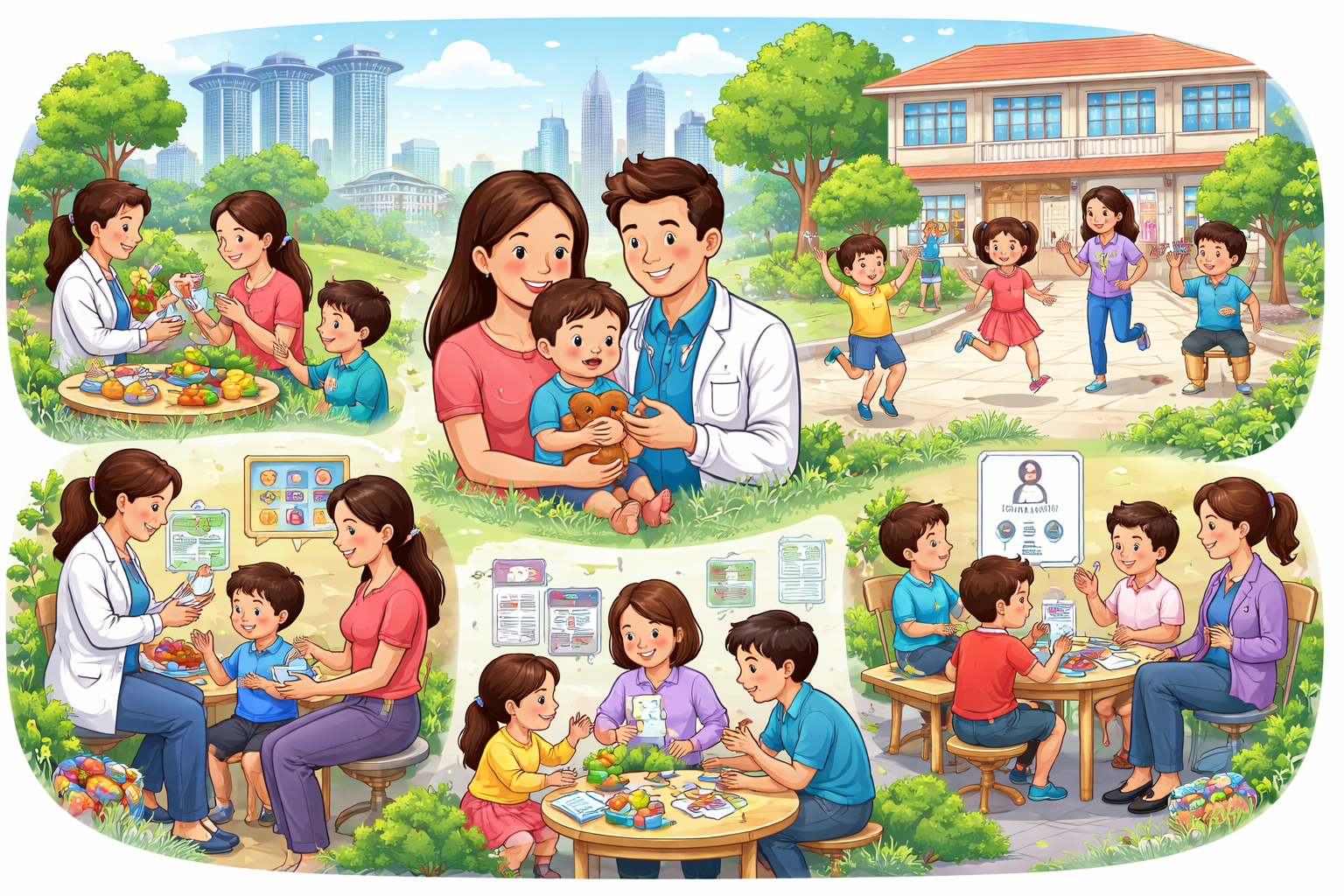
Singapore has established a child health framework that goes beyond basic medical treatment. Its policies and programs are designed to strengthen children’s physical, developmental, and emotional well-being from an early age. The system works through a combination of regular health monitoring, immunization, school-based services, nutritional education, and specialized care for children who need additional support. This integrated approach helps create a stable foundation for healthier childhood development.
One of the most important elements of Singapore’s model is early monitoring. Parents are encouraged to bring children for health reviews during infancy and the preschool years. These check-ups are valuable for observing growth patterns, assessing developmental progress, and identifying possible concerns related to speech, behavior, movement, or learning. The advantage of this approach is that intervention can begin early, when support is often most effective. Early response can reduce later difficulties in school, communication, and daily living.
Immunization also plays a central role in keeping children healthy. Singapore’s vaccination efforts are designed to protect children against diseases that can cause serious illness or complications. Public messaging helps families understand why vaccines matter, while the healthcare system supports timely access and follow-up. Strong immunization coverage benefits both individuals and the wider community by reducing opportunities for infectious diseases to spread.
In addition to disease prevention, Singapore invests in health promotion. Children are taught that health is influenced by everyday habits such as eating well, staying active, sleeping enough, and maintaining hygiene. These ideas are reinforced through schools, public campaigns, and parental guidance. This is especially relevant in modern city life, where academic pressure, digital entertainment, and fast-food convenience can weaken healthy routines. By promoting good habits early, Singapore aims to reduce future health burdens and improve long-term quality of life.
School health services are particularly effective because they reach children consistently and at scale. Rather than waiting for families to discover problems on their own, schools can identify health issues through organized screenings. Vision, hearing, dental condition, and posture are among the areas commonly observed. These checks are important because even minor untreated issues can affect concentration, confidence, and classroom performance. The school environment therefore becomes an important partner in public health.
Another area receiving increasing attention is mental and emotional well-being. Singapore has gradually expanded recognition that child health includes more than the absence of physical disease. Anxiety, social withdrawal, low mood, behavioral issues, and stress can shape a child’s development in major ways. Support systems such as school counselors, child guidance services, and specialist mental health care help address these needs. The shift toward more open discussion of emotional health is a significant step in creating a more balanced pediatric care system.
Children with developmental delays or special needs are supported through structured intervention pathways. For these families, timely access to therapy and professional guidance can make a major difference. Services may focus on communication, social interaction, motor skills, behavior, or learning readiness. Parents are often included in the process so they can continue supportive strategies at home. This family-centered method increases the chances of meaningful progress over time.
Singapore’s child health initiatives are effective because they are practical, layered, and preventive. Medical care, schools, public agencies, and family participation are connected in ways that allow problems to be noticed early and managed properly. By supporting children across multiple dimensions of health, Singapore provides a model that is thoughtful, organized, and strongly oriented toward lifelong well-being.