The Judydoll and Joocyee Precedent: What Cosmetics Learned About Singapore That Fashion Can Borrow
The Chinese fashion wave in Singapore did not arrive in a vacuum. It followed—and in some cases is being accelerated by—the earlier, faster-moving expansion of Chinese beauty brands. In October 2025, Judydoll opened its first physical retail outlet outside mainland China at Bugis+ mall, while sister brand Joocyee launched its first international flagship store at Wisma Atria in July 2025 and expanded to 24 retail locations in Singapore. By early 2026, the parent Joy Group reported that the Singapore region accounted for more than 300 million yuan in retail sales. The beauty category’s Singapore trajectory offers a working template for fashion brands: enter through accessible price points, build brand awareness through high-frequency product categories, then use that consumer familiarity to support higher-consideration apparel purchases.
The Trial Economics of Beauty vs. Fashion
Beauty products have a structural advantage in a new market: low unit price, high trial frequency and visible results. A consumer can test a S$15 lipstick or a S$25 eyeshadow palette with minimal risk. Fashion, by contrast, requires a higher upfront commitment—Edition’s blazers start at S$560—and the fit and fabric cannot be assessed in a single store visit. Judydoll and Joocyee used the beauty trial economy to build distribution depth quickly, moving from e-commerce to 24 physical points of sale within months. That depth creates brand ubiquity: the consumer sees the brand in multiple malls, associates it with accessibility and begins to trust it as a known quantity. Fashion brands entering Singapore cannot replicate that frequency with a single Raffles City boutique. But they can borrow the sequencing logic: establish a lower-commitment entry product (accessories, basics, collaborative capsules) before pushing higher-ticket statement pieces.
The Shared Infrastructure of Chinese Brand Expansion
Beauty and fashion are also benefiting from the same back-end infrastructure. Both categories leverage China’s mature supply chains, data-driven merchandising and omnichannel playbooks—capabilities that Ms Elaine Tan of Republic Polytechnic identifies as central to why Chinese brands can scale overseas faster than earlier generations. A beauty brand’s Singapore sales data can inform inventory allocation for a fashion label under the same parent group. A fashion brand’s mall relationships can smooth the path for a beauty counter. The ecosystem effect is real: Joy Group’s beauty brands and EPO Fashion Group’s womenswear labels are not formally coordinated, but they are collectively normalising the presence of Chinese-designed consumer brands in Singapore’s premium retail environments. Each opening makes the next one less remarkable—and less dependent on novelty to attract footfall.
The Awareness Asymmetry
The 2026 Lianhe Zaobao brand-awareness survey reveals a stark asymmetry between beauty and fashion recognition. While 91% of respondents reported stable or improved favourability toward Chinese brands overall, apparel recognition is concentrated in value-oriented names: Shein at 83%, Li-Ning at 62%, Anta at 46%. Premium Chinese fashion labels remain below 10% awareness in most cases. Beauty brands like Judydoll and Joocyee are not separately broken out in the published summary, but their physical expansion suggests a faster path to visibility because beauty is a replenishment category—consumers return monthly, not seasonally. Fashion brands must work harder to earn a second visit. The beauty precedent suggests that the most effective fashion entry strategies will pair a visible, accessible product with a service model that gives consumers a reason to return before the next seasonal collection arrives.
What Fashion Should Copy—and What It Shouldn’t
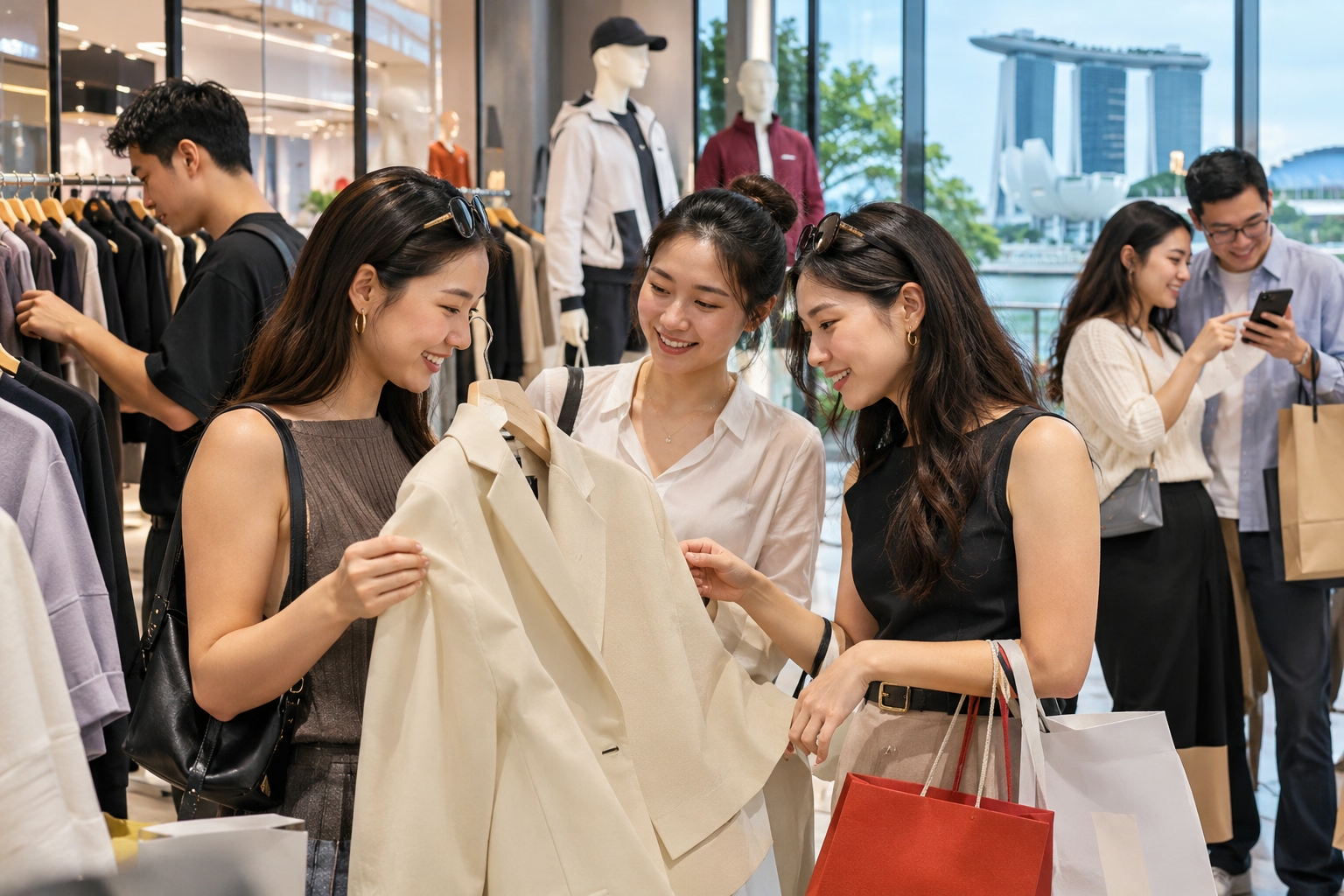
The beauty playbook’s strength is speed and distribution breadth. Its limitation is that beauty does not require the same depth of fit and fabric localisation that fashion does. A lipstick shade can be globally standardised; a blazer cannot. Fashion brands that simply mimic beauty’s rapid multi-outlet rollout risk spreading themselves thin without solving the core product-market fit challenge. The more transferable lesson is the importance of using physical retail as a discovery and education channel, not merely a transaction point. Judydoll and Joocyee’s stores function as testing labs where consumers swatch, compare and ask questions. Fashion brands need equivalent spaces where shoppers can feel fabric weight, understand layering options and receive styling advice that justifies the price premium. The beauty-first wave has made Singaporean consumers more fluent in Chinese brand codes; fashion’s task is to convert that fluency into wardrobe decisions.