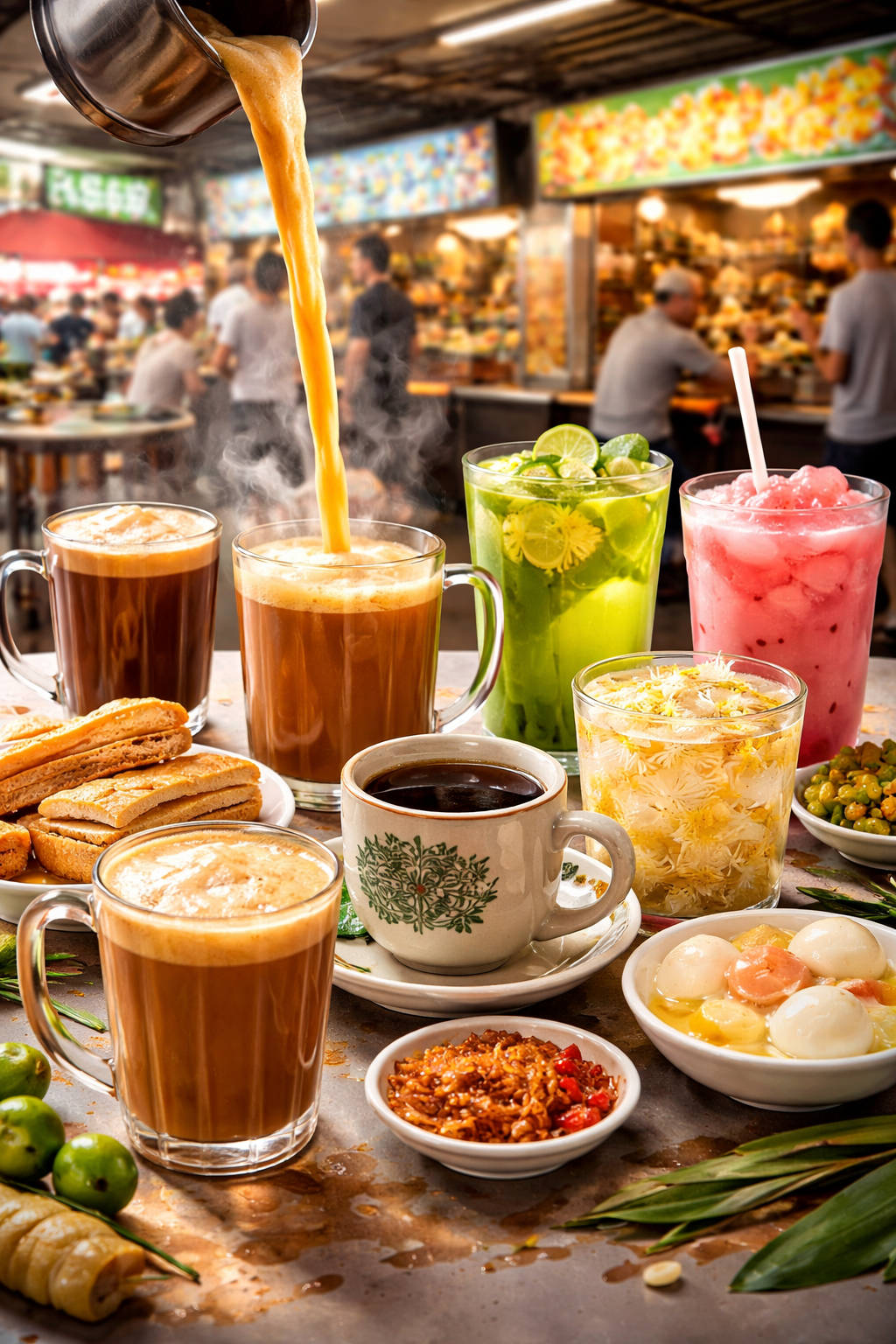
Singapore’s classic drinks are built on technique as much as ingredients. Behind the quick service at hawker centres is a set of methods—pulling, roasting, sock filtering, simmering herbs—that turn simple components into beverages with unmistakable character. From creamy milk tea to dark kopi, these drinks represent a practical craft shaped by climate and culture.
The theatre begins with teh tarik. Strong black tea is brewed and blended with sweetened condensed milk, sometimes tempered with evaporated milk. What makes it special is the “pull”: pouring the tea between containers from a height in repeated cycles. This step does more than impress customers. The motion introduces air, creating micro-foam and smoothing the drink’s texture. It also slightly cools the tea, so it’s ready to sip sooner—useful in busy stalls. Flavor-wise, you get a balance: tannic tea depth rounded by dairy sweetness. Many drinkers enjoy variants like teh halia, where fresh ginger adds a spicy warmth and a more aromatic finish.
Then there’s kopi, the backbone of kopitiam life. Traditional Singapore coffee often relies on robusta beans that are roasted very dark. Roasters may include sugar during roasting to caramelize and deepen the body; some add a small amount of fat, contributing to a glossy look and a bold aroma. The brew process is equally distinctive. Grounds sit in a cloth bag filter—the famous “coffee sock”—and hot water is poured through, producing a strong, concentrated coffee. This base is meant to be mixed, not sipped like a delicate pour-over.
Customization is the local genius. Kopi with condensed milk is sweet and thick; kopi C with evaporated milk is creamier without as much sweetness. Prefer it black? Kopi O includes sugar, while kopi O kosong is plain black with no sugar. Regulars tweak further using short cues: “gao” for stronger taste, “siew dai” for reduced sweetness, and “di lo” for an extra concentrated cup. Similar logic applies to tea orders, turning a simple stall into a modular beverage bar.
Singapore’s weather explains the popularity of cooling drinks. Barley water is a staple because it’s gentle and thirst-quenching. Often served chilled and lightly sweetened, it pairs well with heavily seasoned hawker food. Chrysanthemum tea offers a different kind of refreshment: floral, fragrant, and clean. Many stalls brew it in large batches, and it’s also widely available in bottled form, reflecting how traditional flavors have moved into modern convenience.
For a more complex taste, look to Chinese herbal drinks (liang cha). These can include a range of botanicals—some naturally bitter, others subtly sweet. The bitterness is not a flaw; it’s part of the identity, tied to traditional ideas of balancing heat in the body. Some vendors sweeten their blends; others keep them intense for regular customers who appreciate the medicinal edge. A related treat is tortoise jelly, often served cold with syrup. It’s both beverage and dessert, with a smooth jelly texture and herbal depth.
Fresh-pressed options are also central. Sugarcane juice is made on the spot by crushing cane stalks through a mechanical press. The flavor is bright and naturally sweet, with a green, grassy note that feels especially satisfying in humid heat. Many stalls add lime for acidity and lift. Another nostalgic drink is bandung, made with rose syrup and milk. Its perfume-like aroma and pink color make it instantly recognizable, and it remains popular at Malay eateries and casual family meals.
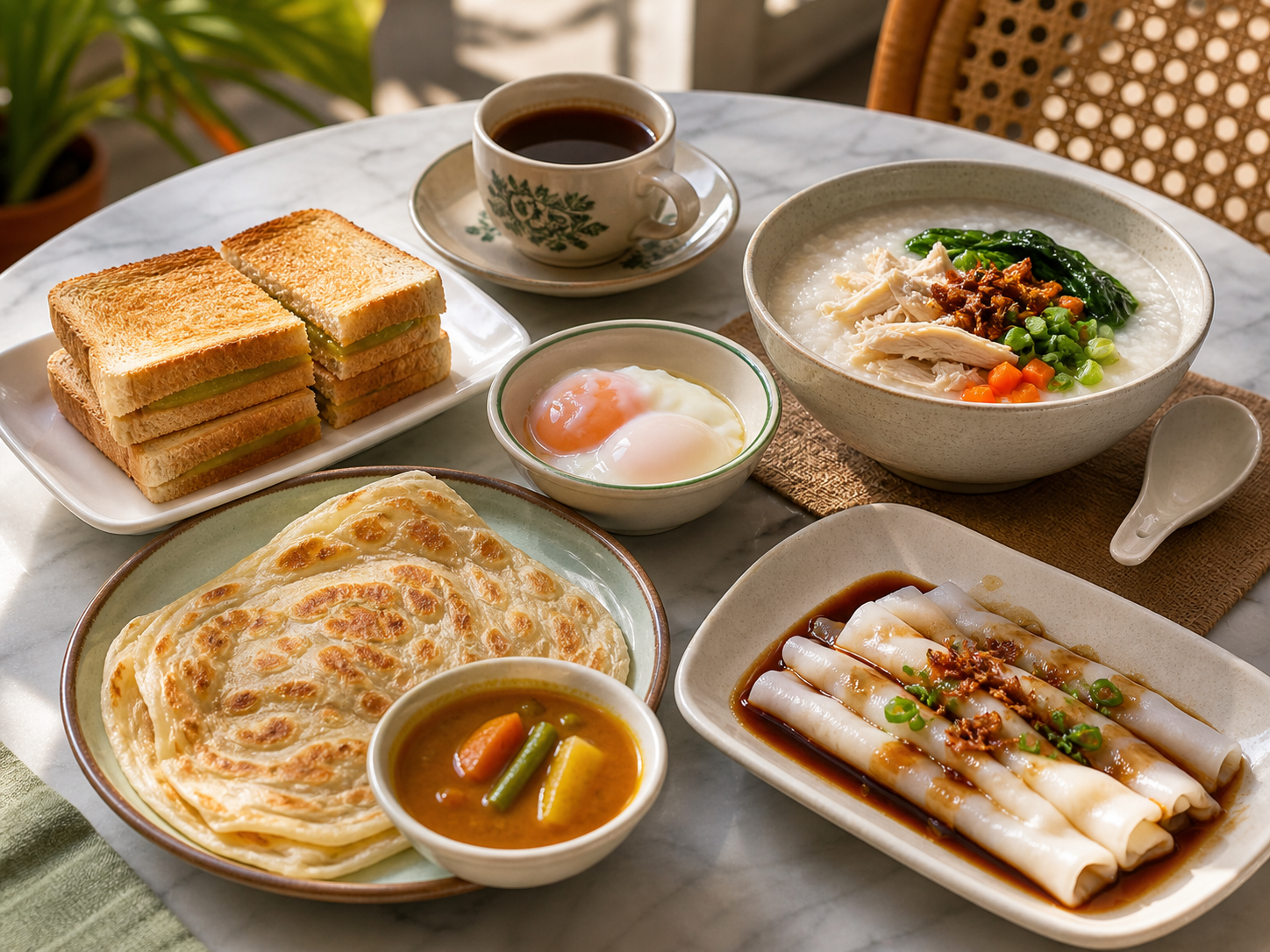
Traditional drinks in Singapore are inseparable from daily eating patterns. Morning kopi or teh often comes with kaya toast and soft-boiled eggs, while herbal teas and barley water appear as afternoon coolers. At night, teh tarik returns alongside prata in bustling supper spots.
When you explore these beverages, watch how they’re made. The foam on teh tarik, the scent of kopi roasting, the simmering pots of herbal tea—each technique carries history, practicality, and the tastes of Singapore’s many communities.