The Taylor Swift Precedent That Changed the Game
In 2024, Singapore authorities provided Taylor Swift with financial incentives reportedly equivalent to several hundred million yen per concert, securing an exclusivity arrangement that blocked other Southeast Asian stops. The result was a reported S$350–500 million in tourism receipts and a GDP contribution of roughly 0.2 percent in Q1 2024. The term “Swiftonomics” entered the regional vocabulary. More importantly, it demonstrated that a small city-state could outcompete larger neighbors for the world’s biggest tours through coordinated government intervention.
The Institutional Machinery
Singapore’s concert strategy is not ad hoc. The Singapore Tourism Board has partnered with travel platforms and event organizers to promote concerts and experiences, many of which feature Singapore-only stops. The government has streamlined visa processes, upgraded venues, and introduced incentive programs to attract top global performers and high-value business events. Financial instruments such as exemptions on equipment imports reduce the logistical burden on touring productions. The message to promoters is clear: Singapore will make it easier and more profitable to choose this market over alternatives.
The Regional Arms Race
Singapore’s success has triggered a competitive response. Thailand, Malaysia, Indonesia, and the Philippines are all revising their own concert attraction strategies, with simplified visa regimes and venue upgrades. The competition is no longer about who can host the most shows, but who can secure exclusive regional stops that concentrate spending within their borders. Singapore’s advantage lies in its combination of infrastructure readiness, political stability, and institutional capacity to coordinate across tourism, transport, and immigration portfolios.
K-Pop as a Strategic Bet
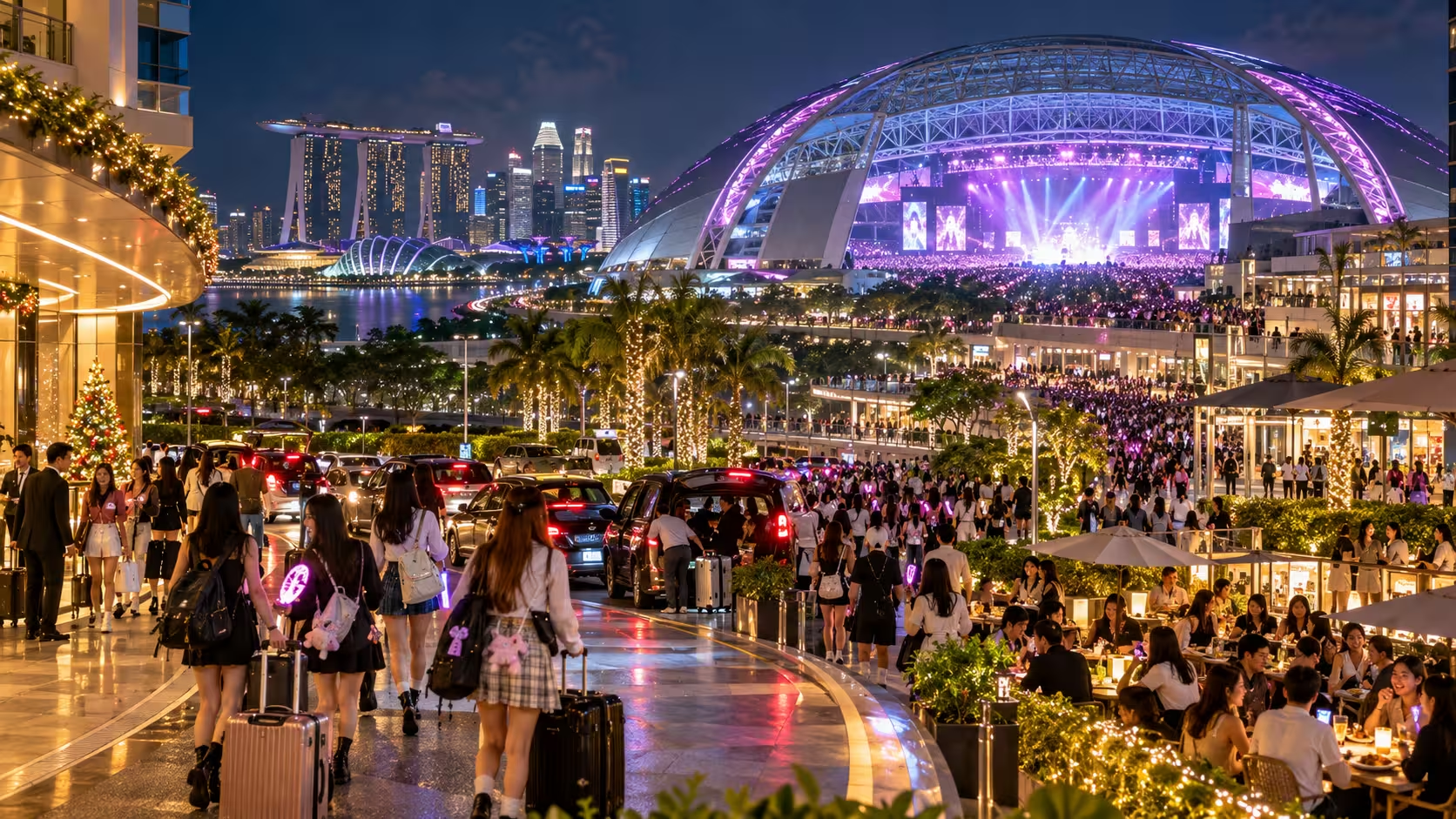
The Singapore Tourism Board has explicitly identified K-pop as a growth driver. Ticketmaster listings for K-pop events in Singapore increased by approximately 250 percent between 2022 and 2024, and the STB expects that trend to continue. BTS’s December 2026 residency is the centerpiece of that bet. With hotel bookings already surging and economists projecting S$200–300 million in tourism receipts, the K-pop strategy is delivering measurable returns.
The Infrastructure Layer
Policy alone cannot sustain a concert economy without physical capacity. Singapore is investing in a layered venue network: the National Stadium for mega tours, Apex @ EXPO for mid-tier acts, and Live Nation’s Grange Road venue for intimate shows. This infrastructure ensures that Singapore can host touring productions across multiple budget tiers and audience scales, rather than competing for a narrow band of stadium-level acts.
What Other Cities Can Learn
Singapore’s playbook is not simply about writing checks. It is about aligning incentives with infrastructure, immigration policy, and destination marketing. The exclusivity clause that defined the Swift deal may not be replicable in every context, but the broader lesson is that concert tourism rewards coordination. Cities that treat concerts as isolated entertainment events will lose to those that treat them as strategic economic instruments.