The Workforce Behind the App
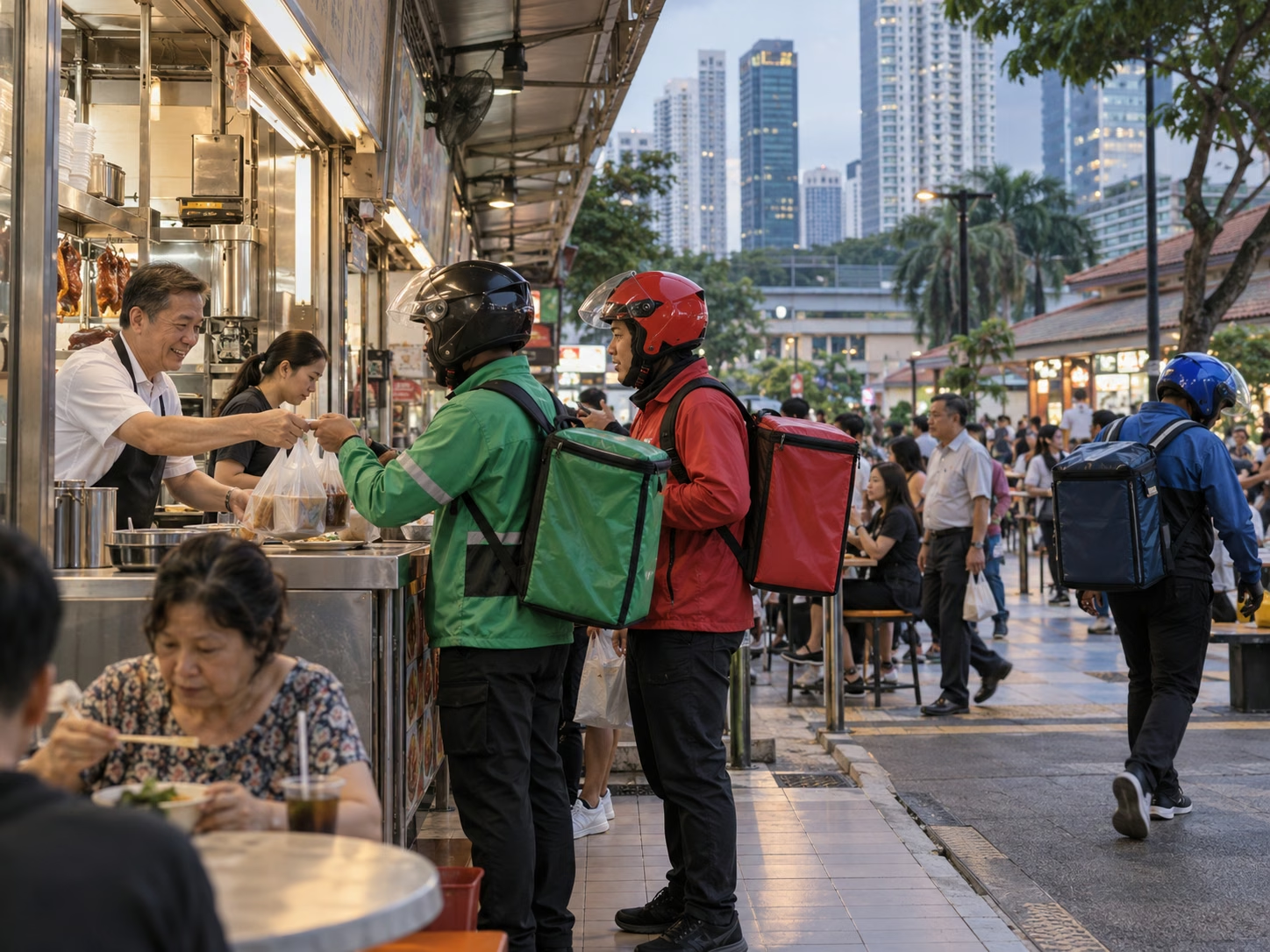
Every delivery order placed in Singapore—whether a late-night satay from a hawker centre or a carton of milk from pandamart—is fulfilled by a rider navigating traffic, weather, and increasingly complex platform algorithms. These workers, numbering over 141,000 according to audience data, form the invisible infrastructure of Singapore’s convenience economy. Yet the same market consolidation reshaping the industry’s corporate landscape is profoundly altering the economic reality for those who depend on delivery platforms for their livelihoods.
Market Concentration and Rider Bargaining Power
The exit of Deliveroo in March 2026, while celebrated by some analysts as a necessary correction in an oversaturated market, has significant implications for delivery riders. With Grab and Foodpanda now controlling 93% of the market, riders’ ability to negotiate favourable terms has diminished. Analysts predict that platforms may shift away from sign-up bonuses and surge incentives—previously used to attract and retain riders—towards more performance-based pay structures.
Riders who switched platforms following Deliveroo’s departure could also face stronger competition for orders. As Nanyang Technological University’s Assistant Professor Lee Wee Kiat noted, reduced platform competition may weaken riders’ bargaining power over the longer term.
The Platform Workers Act: A New Framework for Protection
Against this backdrop of market consolidation, Singapore has implemented significant regulatory reforms. The Platform Workers Act, which came into effect in January 2025, has provided platform workers with improved housing and retirement adequacy, financial protection in the event of work injury, and a formal representation framework. The Platform Workers CPF Transition Support (PCTS) scheme, running from 2025 to 2028, provides targeted support as CPF contribution rates for platform workers are gradually increased to align with employees.
Foodpanda’s Recognition of Worker Representation
A landmark development occurred in September 2026, when foodpanda formally recognised the National Delivery Champions Association (NDCA) to represent its delivery partners. This recognition means that every major food delivery, taxi, and ride-hailing platform operator in Singapore now recognises an NTUC-affiliated platform work association, ensuring that platform workers across all sectors have formal representation on workplace and welfare matters.
Rising Costs and Targeted Relief
Singapore’s platform workers face persistent cost pressures, particularly from fuel prices. In response, the National Trades Union Congress (NTUC) has stepped in to help ride-hail drivers and delivery riders through measures including rental rebates and fuel vouchers. Through NDCA’s efforts, Gogox provides a $1 fuel support fee per completed order, Grab offers $20 fuel vouchers for motorcycle riders in the Sapphire tier and above, and uParcel has reduced its commission rate from 20 per cent to 16 per cent for its most active drivers.
Additionally, a $200 cash relief payment for platform workers earning more than $500 a month across all platform operators was disbursed from end-April 2026, cushioning the impact of the Middle East conflict on fuel and living costs.
The Road Ahead for Rider Welfare
Despite these measures, challenges remain. A September 2026 report indicated that platform workers still lack routine healthcare access, with foodpanda and Singlife launching a clinic-discount programme in August 2026 to address this gap. As the delivery industry consolidates and platforms seek profitability, the tension between corporate efficiency and worker welfare will remain a central policy challenge for Singapore.