A different Wednesday evening on the river
Clarke Quay, once synonymous with pub crawls and late-night revelry, now shares its waterfront with an indoor dog pool, a music retailer, and fitness spaces. On weekday evenings, CNA TODAY observed many restaurants with only a handful of occupied tables, while a supermarket’s grocer bar and food hall appeared among the busiest venues. The precinct is not empty—it is being used differently.
This shift is not a simple story of decline. It is a story of diversification. Both consumers and experts interviewed by CNA agree that Singapore’s nightlife will likely never return to its pre-pandemic form, having been reshaped by alcohol restrictions, rising transport costs, and a consumer preference for fewer boozy nights and more sober, novel experiences. The daytime and early-evening economy is becoming part of the answer rather than a symptom of the problem.
Day-to-night programming as a survival strategy
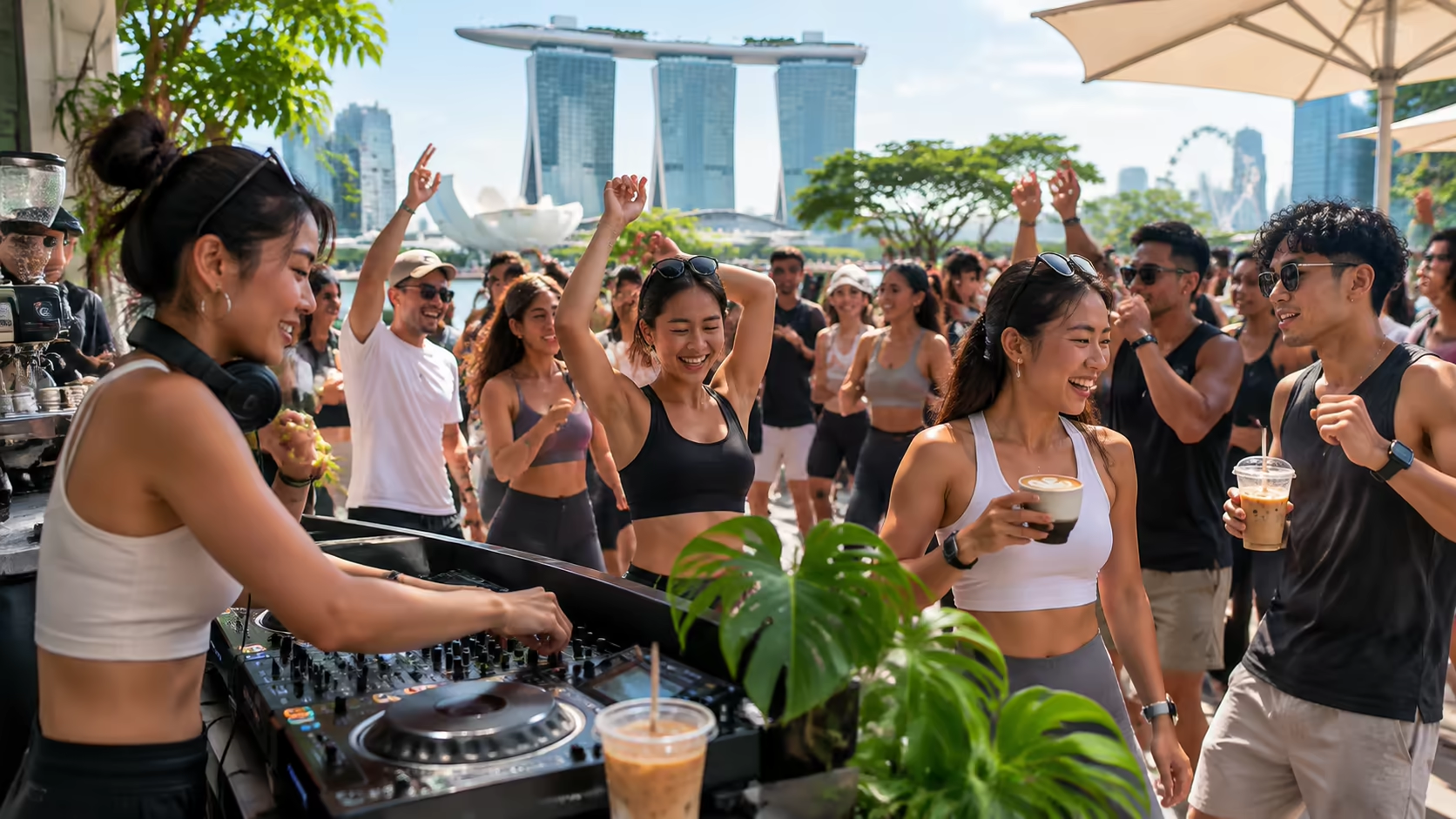
The Singapore Nightlife Business Association frames the industry as being in transition, not decline. Operators are experimenting with day-to-night programming and experience-driven offerings to stay relevant amid rising costs and evolving lifestyles. This is visible across the three quays: morning raves, wellness events, and coffee-led social formats are drawing crowds into hours that were once dead zones for nightlife real estate.
Zouk’s multimillion-dollar revamp, expected to be completed in mid-2026, is anticipated to boost footfall by around 20 per cent—a signal that major players still believe in the market, but the surrounding ecosystem is no longer exclusively built around late-night alcohol sales. The revival is hybrid: reimagined clubs alongside community events and daytime formats, competing for leisure spending that is increasingly fragmented across physical and digital experiences.
The “third space” between brunch and bedtime
Daytime clubbing fills a gap that traditional precinct planning did not anticipate. Events run from 2 p.m. to 7 p.m., or from 9 a.m. to 1 p.m., and use cafes, rooftops, gyms, and barbershops as venues. This temporal flexibility allows precincts to capture spending from people who want to socialise but not stay out late—parents, fitness-focused professionals, and younger consumers with tighter budgets.
The wellness layer is particularly relevant to precinct reinvention. At Ann Siang Road, a collaboration between a music studio, an ice-bath operator, and a bakery has created sunrise wellness experiences with cold plunges, saunas, coffee, and a DJ—a format that attracted 30 per cent more participants each event since it began in 2023. This is not a nightclub replacement; it is a new category of urban social infrastructure.
Visitor numbers across the Clarke Quay and Robertson Quay area increased by about 15 per cent year-on-year, even as overall tourist arrivals fluctuated—suggesting that diversified, daytime-friendly programming is contributing to footfall resilience.