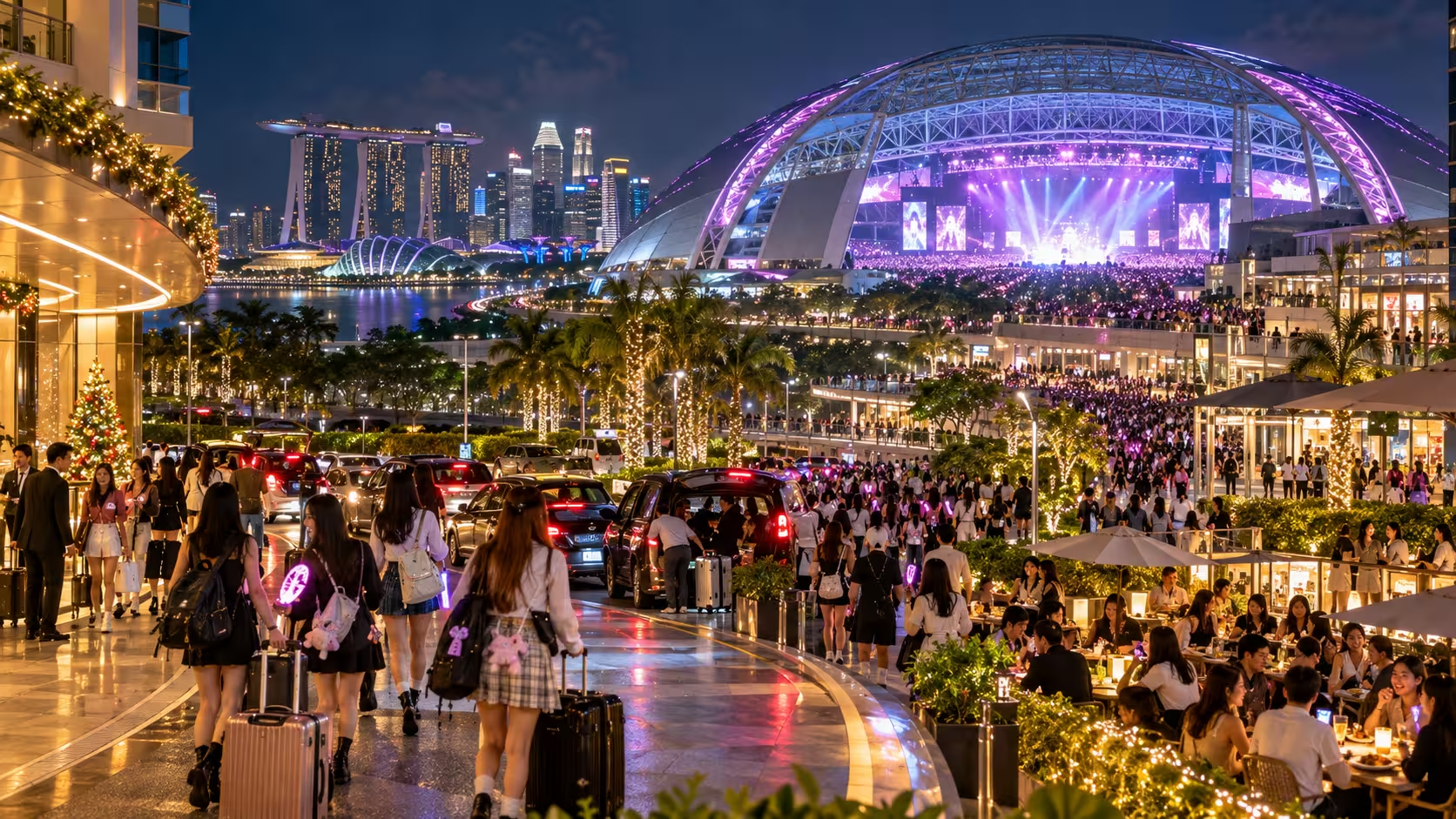
On 18 December 2026, a 3,500-square-meter section of Gardens by the Bay’s West Lawn will become the largest presentation of Studio Ghibli’s animated worlds ever assembled. The Story of Studio Ghibli will feature 12 life-sized recreated environments, including an eight-meter-tall three-dimensional bathhouse from Spirited Away—a world-first installation—and immersive scenes from My Neighbor Totoro, Princess Mononoke, and The Boy and the Heron . Tickets went on sale in September 2026, with adult prices ranging from S$39 for Singapore citizens and permanent residents to S$55 for standard peak admission .
Why This Exhibition Matters Beyond Fandom
The Ghibli exhibition is not merely a cultural event. It is a case study in how Singapore is using immersive intellectual property to capture tourism spending at the premium end of the market. The Singapore Tourism Board is a supporting partner, and its director of leisure events, Ms Guo Teyi, described the exhibition as contributing to “Singapore’s vibrancy, adding to our line-up of world-class experiences and reinforcing our appeal as the region’s premier lifestyle destination” .
That language reflects a deliberate strategy. Singapore’s tourism receipts hit a record S$23.9 billion for the first nine months of 2025, with entertainment and sightseeing spending each growing 15% . Immersive exhibitions sit at the intersection of several high-value tourism behaviors: they justify extended stays, they attract dedicated fan audiences who travel specifically for the experience, and they generate ancillary revenue through merchandise, food and beverage, and bundled hotel packages.
The Ghibli exhibition’s producer, M Experience, explicitly framed the project as an experience “to be felt” rather than simply viewed. CEO Sean Lim stated that visitors would be invited to “step into the stories themselves and connect with the emotions, values and imagination that continue to resonate across cultures and generations” . That emotional framing is commercially potent. Fans of Ghibli are not casual consumers; they are deeply invested in the studio’s visual and narrative universe, and they will pay for proximity to it.
The Broader Immersive Exhibition Economy
Ghibli is the highest-profile example, but it is part of a wider pattern. Singapore’s immersive entertainment market segmentation shows that museums and education accounted for USD 120 million in 2025, while immersive theatre and attractions contributed USD 180 million . The deployment segment reveals that hardware represented USD 540 million, software USD 470 million, and content services USD 190 million . These figures suggest that the infrastructure for immersive exhibitions—projection systems, spatial audio, interactive sensors—is already substantial in Singapore, reducing the marginal cost of mounting new productions.
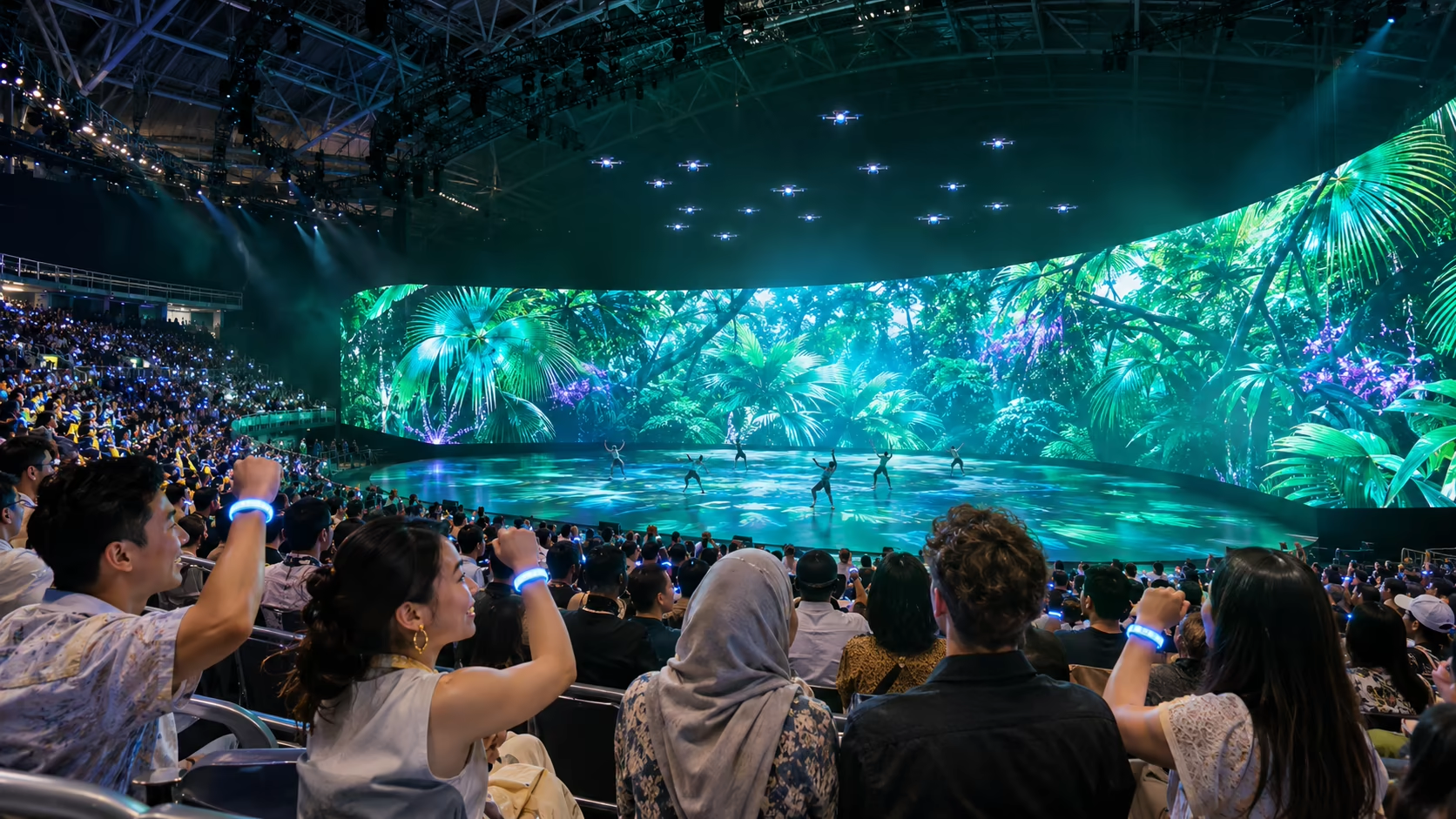
The competition for audience attention is intensifying. Exploria at Mandai offers a permanent, nature-themed immersive experience at a lower price point. The National Day Parade demonstrated that large-scale drone and projection spectacles can be mounted at stadium scale. Gardens by the Bay’s Ghibli exhibition will run for nearly seven months, from December 2026 to July 2027, giving it a long tail for tourism marketing .
The Risk of IP Dependence
There is a structural question beneath the excitement. Immersive exhibitions built on external intellectual property—Ghibli, Harry Potter, Disney—depend on licensing agreements that can be expensive, time-limited, and subject to the whims of the rights holders. Singapore’s advantage lies in its ability to attract these productions, but its long-term position would be stronger if it also developed original immersive content that could travel internationally.
The Studio Ghibli exhibition includes educational initiatives and learning opportunities focused on creativity, resilience, and environmental stewardship, with details to be announced closer to opening . If those initiatives succeed in creating local engagement beyond the ticket queue, they could lay groundwork for a domestic immersive content ecosystem. That, more than any single blockbuster exhibition, would signal that Singapore has moved from hosting immersive entertainment to producing it.