The Mechanics of Desire
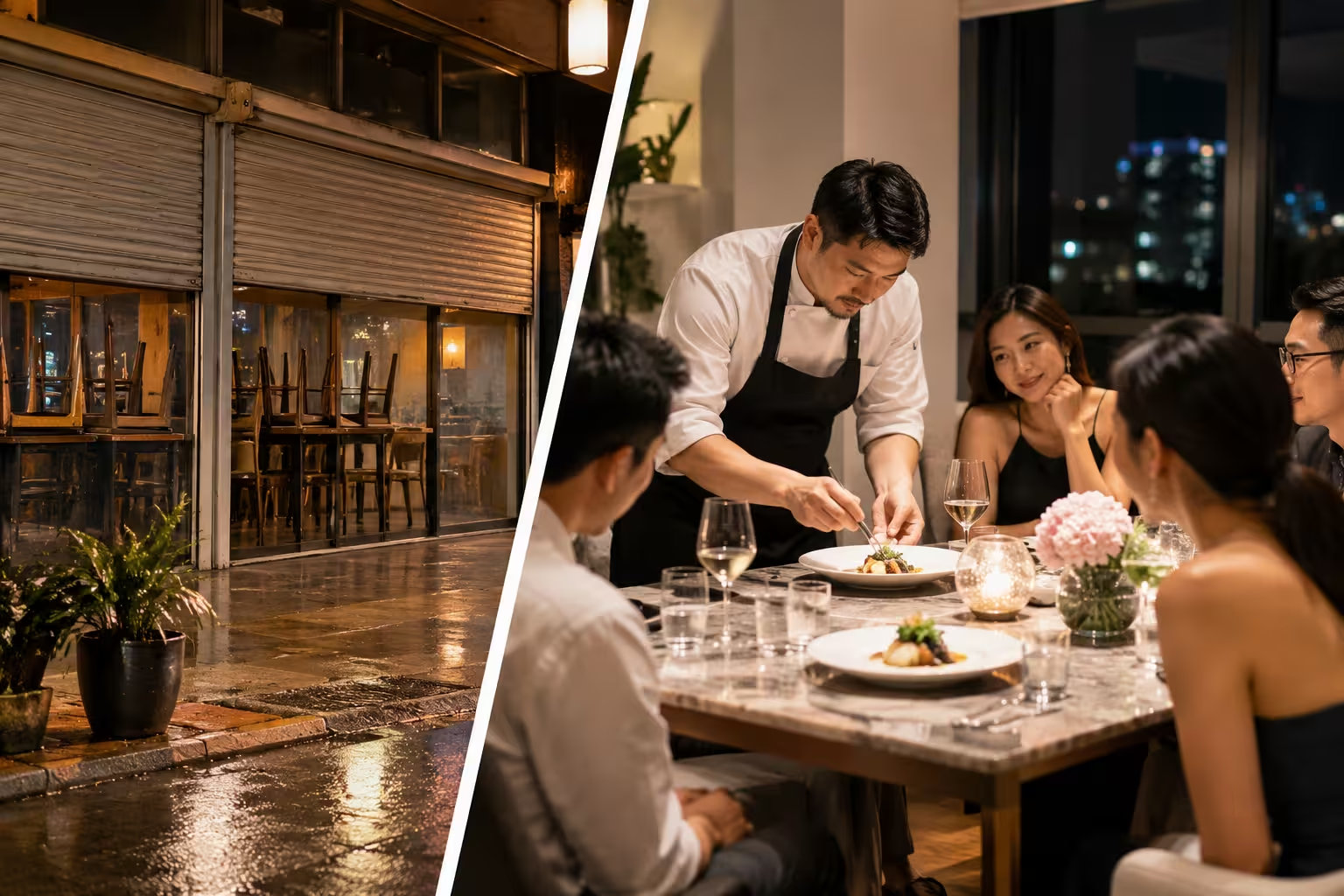
In Singapore’s private dining sector, access is the product. The most coveted tables do not advertise. They do not have reservation platforms. They operate through Instagram direct messages, email inquiries, and informal waitlists that stretch across seasons.
Kanves, widely described as one of the city’s most sought-after private dining experiences, opened its booking window for September 2026 through February 2027 on a single evening—1 September 2026 at 9pm—announced via Instagram . The minimum party is six; the maximum is eight. At $170 per person and up, a dinner for eight represents roughly $1,360 in revenue for one evening’s service .
No Burn No Taste requires a minimum of seven to eight guests for its barbecue omakase, with smaller groups subject to a $1,050 minimum spend . These are not casual drop-in venues. They are appointment-driven, high-ticket experiences where the booking process itself functions as a filter.
Why Scarcity Works
The private dining model cannot scale. A residential kitchen seats eight, perhaps twelve. The chef is the operator. There is no second seating. Under these constraints, scarcity is not a marketing tactic—it is an operational reality. But the market has learned to read scarcity as a signal of quality.
Time Out’s coverage notes that “the surging pride and excitement when you finally secure a table after months of being on the waitlist” is part of the appeal . The meal begins before the food arrives: it begins with the confirmation.
The Risk Beneath the Hype
Scarcity also creates vulnerability. A single chef’s illness, a relocation, or a regulatory complaint can eliminate a table entirely. Home-based F&B operators are subject to neighbour feedback and can be required by URA or HDB to scale down or cease operations if their activities are deemed to affect residential amenity . There is no corporate backstop, no PR team, no second location.
For diners, the calculus is straightforward: the experience is irreplaceable precisely because it is fragile. For the chefs, the fragility is the business model.