K-pop fandom is becoming an increasingly influential part of international entertainment travel, with fans frequently organizing trips around major concerts and artist-related experiences.
Singapore is emerging as an important destination within this market, offering stadium-scale performances alongside shopping districts, cultural attractions, and dedicated fan activities.
In 2026, the relationship between K-pop and tourism is becoming more visible through Singapore’s preparations for the return of BTS and an ambitious month-long entertainment program.
These developments illustrate how fan communities can influence destination marketing and tourism-related business opportunities.
Four BTS Concerts Establish Singapore as a Major K-Pop Destination
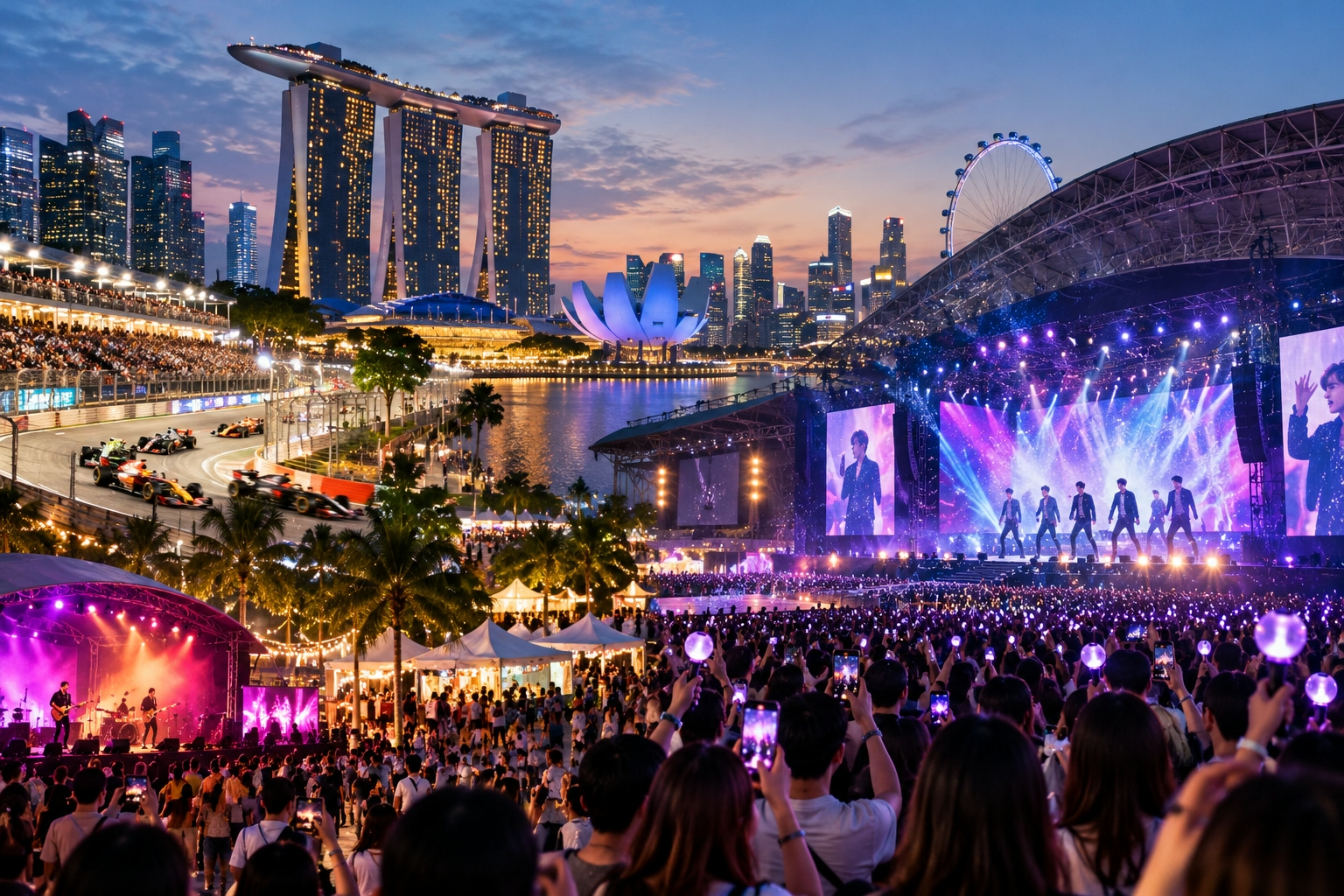
BTS is scheduled to perform at Singapore’s National Stadium on December 17, 19, 20, and 22, 2026, as part of the group’s ARIRANG world tour.
The performances will mark the group’s first full-group concerts in Singapore since 2019.
According to the official Ticketmaster Singapore event listing, all four shows have sold out. Advertised standard ticket categories ranged from S$148 to S$328, excluding booking fees, while VIP tickets were listed at S$388. Ticketmaster SG
The VIP offering includes benefits such as access to a soundcheck session, commemorative merchandise, and a dedicated merchandise booth lane, subject to availability.
These features illustrate how concerts increasingly incorporate premium experiences beyond the main performance.
Citywide Fan Activities Extend the Entertainment Experience
Singapore’s tourism authorities are also working with HYBE to present BTS THE CITY ARIRANG throughout December 2026.
The initiative will introduce music-themed activities at multiple destinations, including Sentosa, Jewel Changi Airport, the National Museum of Singapore, and The Kallang.
Planned attractions include interactive installations, themed performances, and music-related entertainment.
For international fans, such experiences offer additional opportunities to engage with the artist’s music and broader creative identity.
They can also encourage visitors to include several neighborhoods and attractions in their travel itineraries.
Social Media Strengthens the Appeal of Fan Tourism
Online fan communities play an important role in spreading awareness of international concerts and related activities.
Concert announcements, ticketing experiences, travel recommendations, and fan-generated content circulate across platforms such as TikTok, Instagram, and YouTube.
These interactions can increase awareness of a host destination among fans who have never visited it.
For tourism businesses, partnerships with fan communities may provide opportunities to reach travelers through entertainment-related interests.
However, promotional campaigns must distinguish clearly between officially organized experiences and unofficial fan activities to maintain consumer trust.
Music Tourism Creates New Opportunities for Local Businesses
Large concerts can stimulate demand for transportation, accommodation, food services, shopping, and merchandise.
Fans traveling internationally may also explore tourist attractions, especially when official entertainment programs extend across several days.
Singapore’s integrated public transportation system makes it practical to connect stadium visits with destinations such as Marina Bay, Orchard Road, and Sentosa.
Local businesses can benefit by offering convenient services and relevant visitor experiences without relying entirely on concert-related promotions.
At the same time, accurate attendance data and visitor spending surveys are necessary to measure the actual economic benefits of K-pop tourism.
Singapore’s Position in Asia’s Competitive Concert Market
Singapore competes with cities including Bangkok, Kuala Lumpur, Jakarta, and Seoul for international entertainment audiences.
Its advantages include major event venues, international accessibility, established hospitality services, and partnerships with entertainment companies.
The December BTS concerts provide a significant opportunity to demonstrate how fan experiences can transform a traditional concert visit into a longer tourism journey.
The broader challenge is maintaining this appeal across different artists, genres, and fan communities throughout the year.