The Least Visible Layer of Reworked Fashion
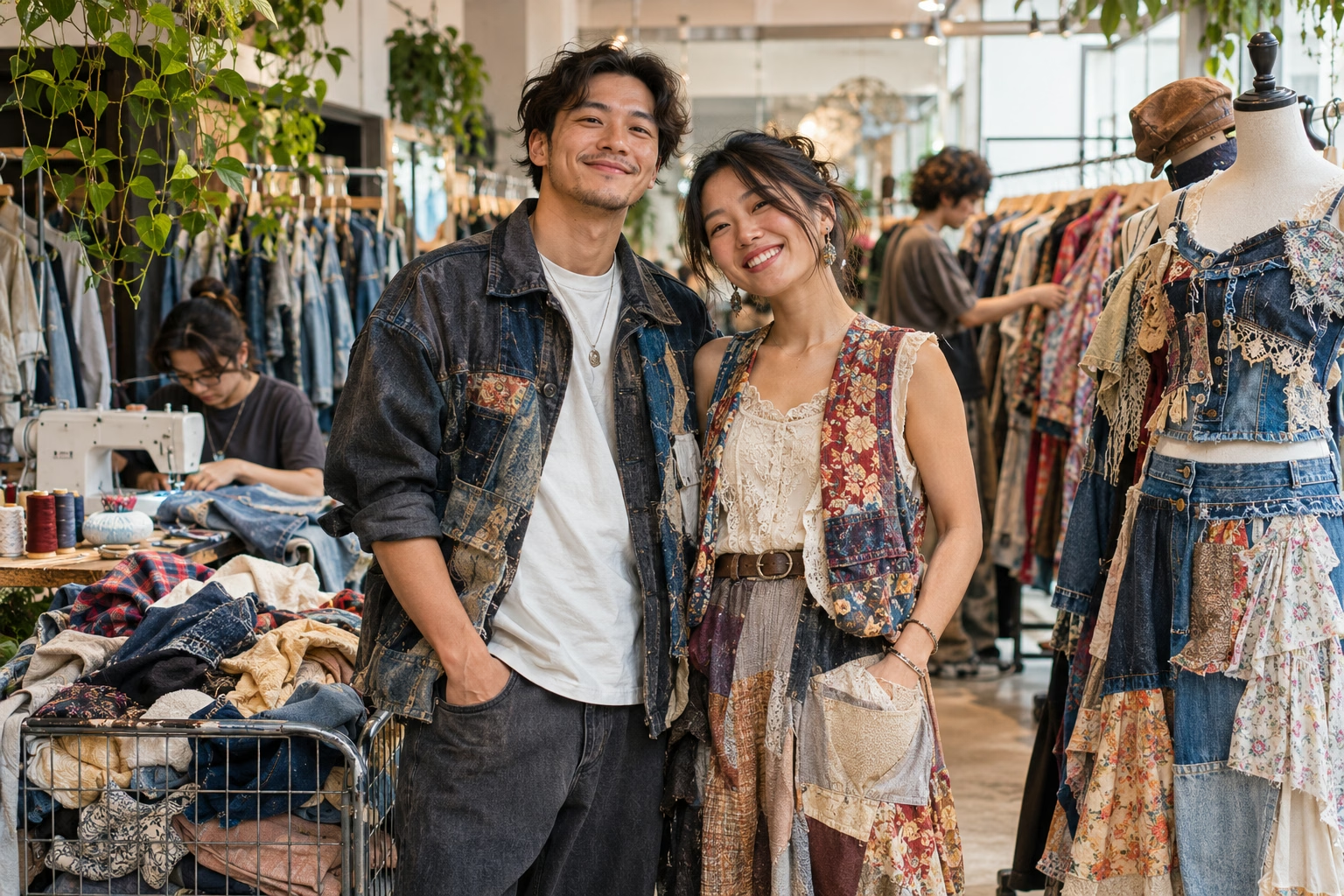
The most photographed moments in Singapore’s reworked fashion scene are consumer launches: a sari shirt drop, a kimono collection, a patchwork denim showcase. But a quieter, potentially more scalable layer is emerging in the B2B space, where textile waste is not donated by individuals but generated in bulk by organisations. Commenhers, a Singapore sustainability-driven creative studio founded in 2022, has built its model around this stream, transforming flawed or decommissioned uniforms into unique, retail-ready products and corporate gifts.
Uniforms as a Predictable Waste Stream
Corporate uniforms are an underrated feedstock for circular design. They arrive in consistent fabric types, predictable volumes, and identifiable batches — qualities that make them easier to trace and process than mixed consumer donations. When a uniform is decommissioned because of a rebrand, a sizing change, or a defect, the volume is often too large for informal donation channels and too specific for generic textile recycling. Commenhers’ B2B upcycling solution steps into that gap, converting organisational waste into branded products that carry a circular narrative.
Social Impact as a Production Input
What distinguishes the B2B reworking model in Singapore is its integration of social beneficiaries into the production chain. Commenhers works with local beneficiaries, including housewives, to produce upcycled goods. This is not corporate social responsibility appended to a manufacturing line; it is a labour model that distributes income through the circular economy. The enterprise is registered as an Emerging Social Enterprise with raiSE, Singapore’s social enterprise network, and reported its latest impact year as 2026. The model suggests that reworked fashion’s local value is not only environmental but distributive: it creates flexible, skill-based work close to where textile waste is generated.
Why B2B Reworking Attracts Different Buyers
The customer profile in B2B upcycling differs sharply from the direct-to-consumer reworked fashion buyer. Corporate clients are not primarily purchasing uniqueness; they are purchasing a verifiable waste diversion story that can be attached to ESG reporting, employee engagement, and brand positioning. That changes the design brief: products must be reproducible enough for gifting at scale but distinctive enough to avoid looking like recycled promotional merchandise. Commenhers’ focus on “circular design, community engagement, and education” reflects this hybrid requirement — the output must function as both product and proof point.
The Scaling Constraint — and the Opportunity
The B2B reworking model faces a familiar constraint: manual labour and small-batch production do not scale like conventional manufacturing. But that constraint is also a moat. Large textile recyclers cannot easily pivot to artisanal, small-run upcycling, and fast fashion brands cannot replicate the provenance narrative without restructuring their supply chains. For Singapore, the opportunity lies in positioning B2B reworking as a high-value, low-volume service sector — one that complements, rather than competes with, industrial recycling. The sector’s growth will depend on whether corporate procurement teams treat upcycled products as compliance-driven line items or as brand-building investments.