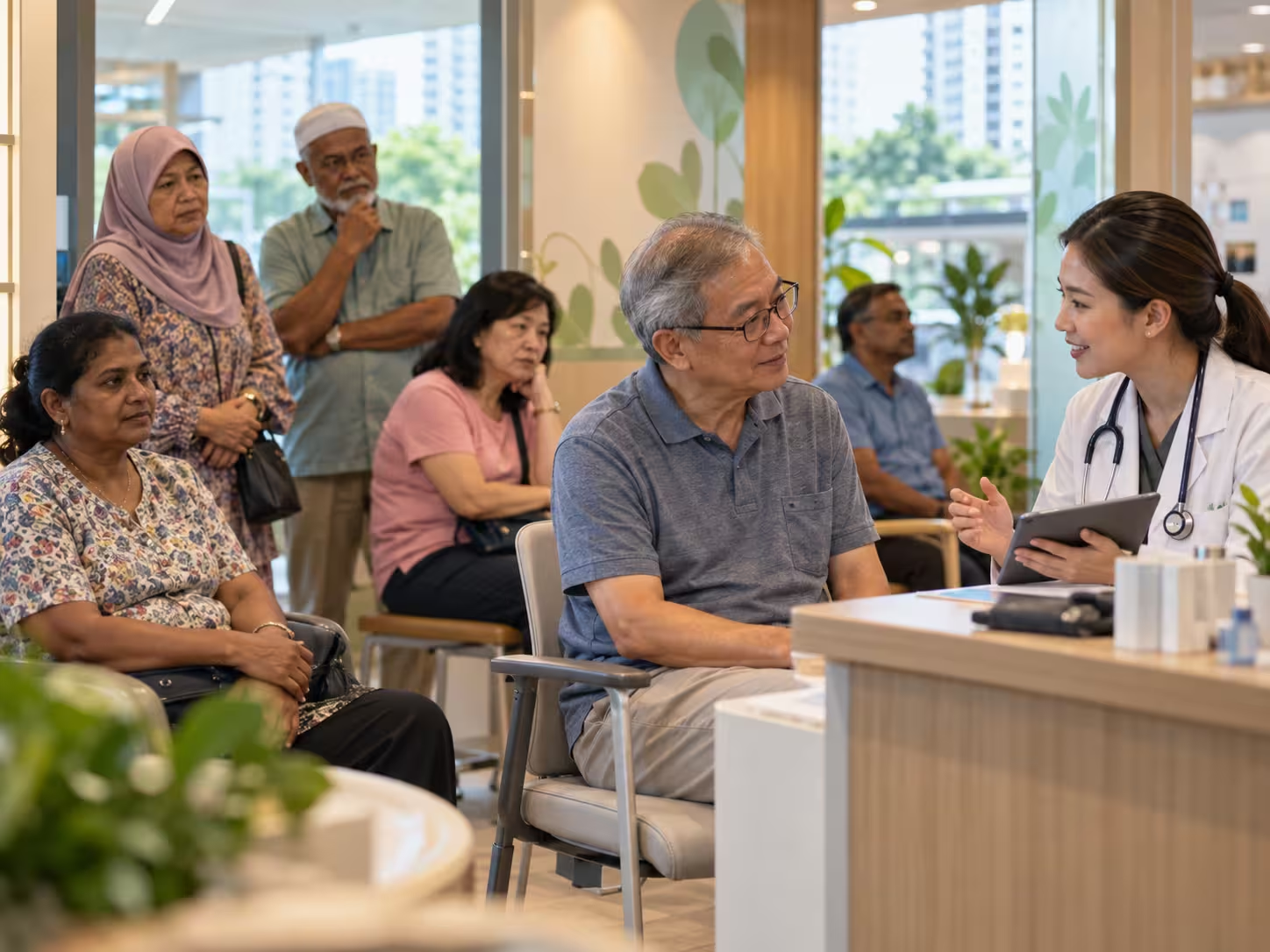
Reimagining Primary Care Delivery
As Singapore grapples with an ageing population and rising chronic disease burden, a quiet revolution is taking place in the neighbourhoods of western Singapore. Community Health Posts (CHPs) — neighbourhood spaces staffed by community nurses and health coaches — are transforming how residents access preventive care, chronic disease management, and health coaching just minutes from their homes.
By Q1 2026, the National University Health System (NUHS) had established 11 enhanced CHPs in Active Ageing Centres, operating weekly rather than monthly and allowing walk-ins. These facilities offer basic health assessments, health programmes for individuals at risk or with chronic conditions, caregiver support, and post-discharge follow-ups. CHP services were extended to An Nur Mosque and Yusof Ishak Mosque by September 2026, bringing culturally familiar and trusted community spaces into the healthcare delivery network.
Technology Meets Community Care
The integration of technology has been central to the CHP model. In May 2026, NHG Health partnered with Singtel to provide 5G+ Priority network connectivity to enhanced CHPs, enabling advanced telemedicine capabilities and real-time health monitoring. Another key feature is frailty prevention and management through the Be Fit, Not Frail (BFF) programme for seniors aged 60 and above.
Woodlands Hospital, scheduled to offer specialist-supported care via enhanced CHPs or teleconsultation from end-March 2026, represents the next evolution of this model — bringing specialist expertise directly into community settings without requiring patients to travel to acute hospitals.
Health Together: A Digital Companion
Complementing the physical CHP infrastructure, NUHS launched the Health Together initiative in May 2023, a community programme supporting residents in the western region with health and wellness tips, invitations to community events, and access to resources such as self-help tools and directories of primary care providers. The programme offers a Health Library with bite-sized content, interactive quizzes, and practical advice for managing common chronic conditions like diabetes, high blood pressure, and high cholesterol.
More than 1,700 residents signed up for the YuHua Steps Challenge, a community-based physical activity initiative under this programme, demonstrating the appetite for neighbourhood-level health engagement when services are made accessible and relevant.
The Equity Dimension
The CHP model carries particular significance for health equity. By locating services in Active Ageing Centres and mosques, NUHS is deliberately reaching populations that might otherwise remain disconnected from mainstream healthcare — including digitally excluded seniors, socioeconomically disadvantaged residents, and minority-language speakers who face systemic responsiveness gaps in financial navigation, waiting times, and care coordination.
The expansion of CHPs into mosques represents a recognition that healthcare delivery must adapt to the cultural and religious geographies of Singapore’s diverse communities. As the nation approaches super-aged status, with 21% of the population aged 65 and above, the CHP model offers a scalable template for community-anchored preventive care that could be replicated across other regions. The model’s emphasis on co-designing programmes with community partners — covering physical activity, nutrition, sleep, and mental well-being — suggests a shift from top-down health promotion to genuinely community-embedded care delivery.