The Beauty-Fashion Convergence
The lines between beauty and fashion have always been blurry, but in Singapore’s retail landscape, they are becoming indistinguishable. The explosive popularity of K-beauty has not merely transformed how Singaporeans shop for skincare and cosmetics—it has fundamentally altered the fashion retail experience, creating a convergence that brands and department stores are racing to capitalize on.
The Olive Young Question
The most telling moment in Singapore’s K-beauty boom came not in a store, but at a retail industry conference at Marina Bay Sands in 2026. When a moderator jokingly asked an Olive Young representative when the Korean beauty giant would open in Singapore, the audience erupted in cheers of anticipation. That reaction—for a beauty retailer—captures the depth of Singaporean consumer demand for all things Korean, and it has not gone unnoticed by fashion brands.
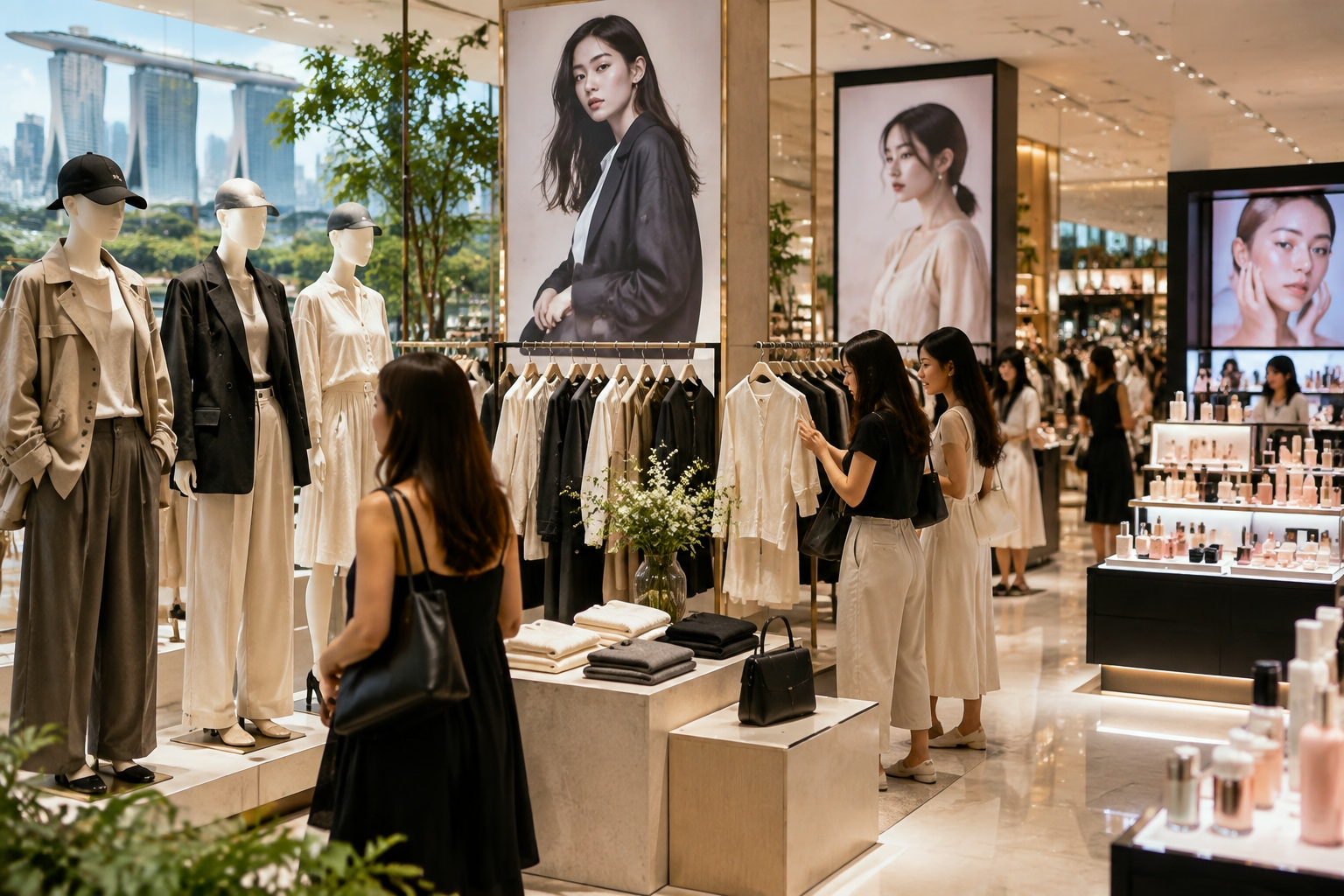
The physical retail evidence is everywhere. Sephora’s Bugis+ location features a dedicated “Korean Skincare” section, with major K-beauty brands like Laneige placed at the front of the store to attract attention. A local curated store called Seoul Beauty sells over 200 types of K-beauty products on Shopee, Southeast Asia’s leading e-commerce platform. Korean beauty has transcended niche status to become a mainstream consumer category in Singapore.
From Skincare to Style
What does this mean for fashion? Everything. Singaporean consumers who have adopted Korean beauty routines are increasingly extending their Korean aesthetic preferences to clothing and accessories. The K-brand phenomenon spans “cosmetics (beauty), food, and fashion,” with brands gaining “deep traction among the local MZ generation” and “elevating to a premium status”.
This convergence is visible in how fashion brands market themselves. When JAAH launched at Metro Paragon, its positioning as a “lifestyle fashion brand” that reflects “the lifestyle of young Koreans” mirrored the holistic approach that K-beauty brands have long employed. The implication is clear: Korean fashion is not just about clothes—it is about a complete lifestyle that encompasses skincare, food, and personal style.
The Amorepacific Experiment
The convergence took a tangible form in June 2026 when Amorepacific, one of Korea’s largest beauty conglomerates, partnered with Lazada to open an O2O (online-to-offline) concept store at Funan. The AMORE Store x Lazada features 11 brands from Amorepacific’s portfolio, including six cross-border brands debuting in Singapore. This format—blending physical retail with e-commerce integration—represents the future of how Korean lifestyle brands enter Southeast Asian markets.
For fashion retailers, the lesson is clear: consumers who buy Korean beauty products are predisposed to buy Korean fashion. The K-brand ecosystem is self-reinforcing. A consumer who discovers Laneige at Sephora may later find herself browsing Studio Tomboy at Metro Paragon. The brands may be separate entities, but in the consumer’s mind, they belong to the same cultural universe.
The Premium Positioning
Perhaps the most significant shift is in how K-brands are perceived. Five years ago, Korean fashion and beauty in Singapore were associated with affordability and accessibility. Today, they are increasingly positioned as premium. The MCM event at Paragon, which filled the mall with fans of ATEEZ member Mingi, demonstrated that K-fashion brands can command luxury-adjacent attention. When a K-pop idol appearance can draw crowds that fill a mall from the first to third floors, the brand equity is undeniable.
This premium repositioning has implications for pricing, retail placement, and marketing strategies. K-brands are no longer competing on price alone—they are competing on cultural cachet, and Singaporean consumers are willing to pay for it.