The Ice Crystal Problem That Costs Millions
Conventional blast freezing creates large, sharp ice crystals that rupture a food’s cellular structure, degrading texture, aroma, and flavour upon thawing. For Singapore’s frozen food industry, this is not an abstract scientific concern—it is a commercial constraint that limits which products can be frozen without perceptible quality loss. Premium seafood, delicate pastries, and tropical fruits like durian have historically resisted frozen formats because the thawing process reveals the damage.
A Singapore Startup’s Solution
Agrifreeze, a Singapore-based food tech startup founded in 2023, has developed a digital freezing technology that uses electromagnetic field waves to control ice crystal formation. Unlike conventional methods, Agrifreeze’s process produces small, rounded crystals that are three times smaller, resulting in food that is, in the words of one investor, “as good as fresh” once thawed.
From Investment Thesis to Commercial Reality
The technology’s most compelling validation comes from Spike Durian, a direct-to-consumer venture launched in December 2024. Christopher Quek, a venture capitalist who founded TRIVE, encountered Agrifreeze through his investment activities and posed a direct challenge: can you blast-freeze durians and deliver fresh-quality Mao Shan Wang?. It took 18 months of research and development to perfect the Agrifreeze blast-freezing process for durian. Chris invested approximately USD 200,000 (SGD 255,810) to found Spike Durian, which sold 4,000 boxes within five months.
Why This Matters for the Wider Industry
Durian is an extreme test case. Its complex aroma profile, creamy texture, and sensitivity to temperature fluctuations make it one of the most difficult products to freeze without quality degradation. If EMF-based freezing can solve the durian problem, it can likely improve outcomes for a wide range of premium frozen products—from sashimi-grade tuna to artisanal dumplings to specialty baked goods.
The Consumer Lifestyle Connection
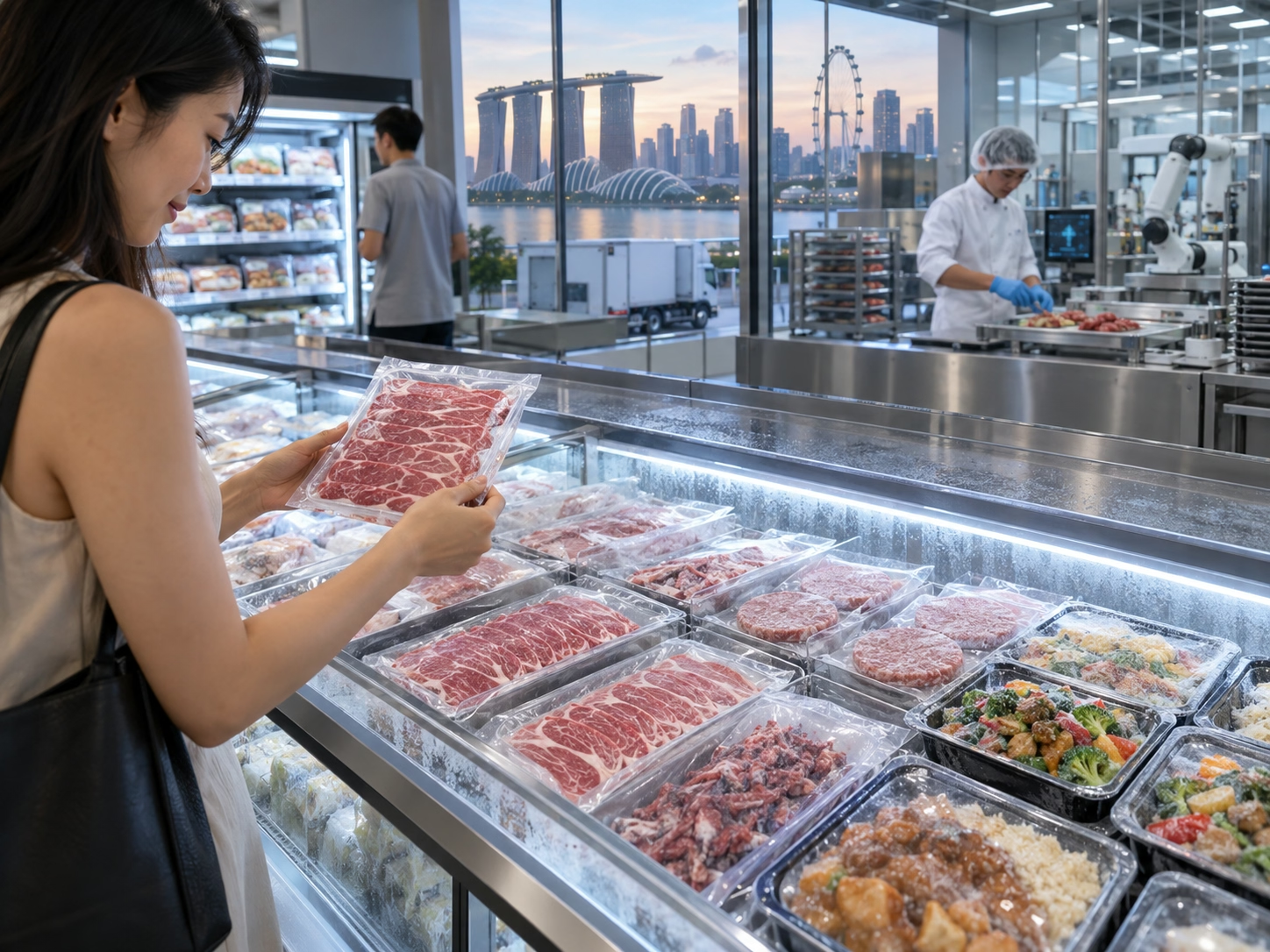
Singaporean consumers are increasingly unwilling to accept the trade-off between convenience and quality. The frozen fruit and vegetables market saw import growth of 4.37% from 2023 to 2024, driven by health-conscious consumers who want the nutritional benefits of fresh produce with the convenience of frozen storage. For these consumers, texture and taste are non-negotiable. EMF freezing technology directly addresses this demand by preserving the sensory qualities that define a product’s value proposition.
Infrastructure and Commercialisation
Agrifreeze’s technology is designed to work with existing freezing equipment, reducing adoption barriers for manufacturers. This compatibility is significant in a market where cold chain infrastructure is well-established but capital investment in new freezing systems is a major decision. The technology has been recognized as part of Singapore’s food tech ecosystem, with Agrifreeze participating in accelerator programmes and generating revenue as of 2026.
The Broader Innovation Landscape
The freezing technology sits within a wider wave of Singapore food tech innovation. Prefer’s fermentation-based approach to creating beanless coffee and cocoa-free chocolate demonstrates that ingredient innovation is progressing in parallel with process innovation. Smart City Kitchens’ Bedok II facility, opening in July 2026, provides specialised low-temperature production environments for frozen food brands, further lowering the barrier to commercialisation. Together, these developments suggest that Singapore is building the technological and infrastructural foundation for a new generation of frozen food products that can compete on quality with fresh alternatives.