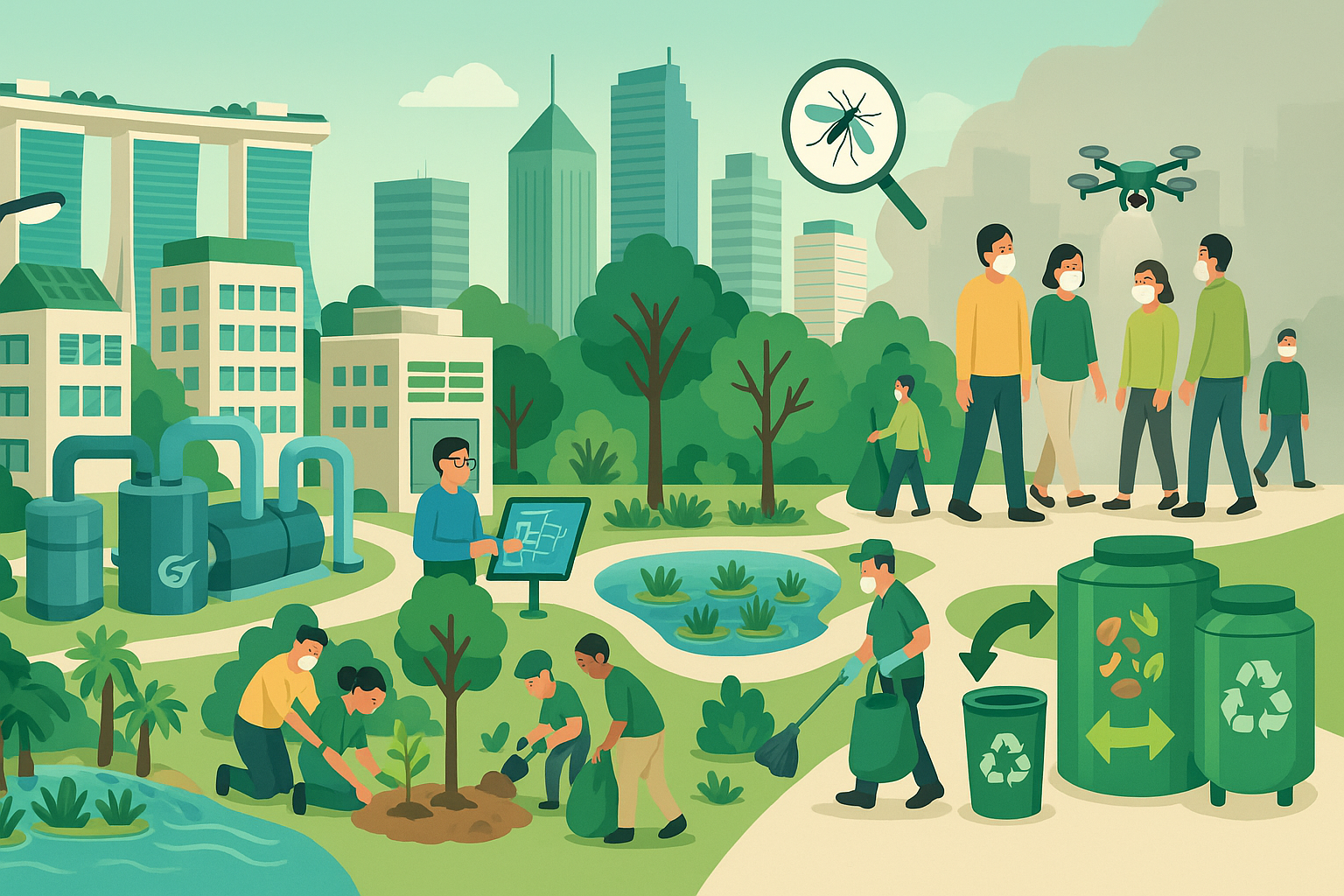
Think of Singapore’s cityscape as a preventive health system. The streets you walk, the trees that shade you, the water that flows past pocket parks—these are engineered to reduce exposures that harm lungs, hearts, and immune systems.
Air quality interventions start with mobility choices. Transit-oriented development and integrated rail-bus services minimise car dependence, cutting PM2.5 and nitrogen oxides. Electronic road pricing and parking policy shape demand, while a growing cycling and walking network reduces localised pollution near schools and estates. Industry sits behind stack standards and monitoring; construction sites deploy covers, wheel-washing, and misting to suppress dust.
Blue-green infrastructure doubles as therapy for urban stressors. The ABC Waters programme threads bio-swales, wetlands, and rain gardens through neighborhoods. These systems trap sediments and nutrients, cool microclimates via evapotranspiration, and offer recreational edges that improve mental well-being. PUB’s water safety framework layers physical, chemical, and biological barriers, so even as climate variability stresses supply, waterborne disease risk remains low.
Waste is handled as a hygiene imperative. Incineration under controlled conditions reduces volume and pathogens; energy recovery offsets fossil fuels. Zero-waste policies strive to keep organics out of the mixed stream (limiting odors and pests) and ensure e-waste doesn’t leach toxics. Cleaner common areas, better bin design, and regular collection reduce vector habitats in dense estates.
Dengue is a designed-against disease. Housing estates incorporate drainage gradients that prevent stagnation, while residents receive cluster alerts and practical routines: cover, clear, and check water containers weekly. Enforcement at construction sites—common breeding locations—pairs with community rewards and education, creating social reinforcement for good habits.
Heat is a rising hazard, intensifying dehydration, heat stroke, and cardiovascular events. Urban cooling is therefore deliberate: expanding canopy cover, planting along wind corridors, applying high-albedo coatings, and incentivizing green roofs and façades. Green Mark standards push buildings toward better insulation, efficient HVAC, and improved ventilation—benefitting indoor air quality and reducing mold risks.
Health communication ties the city together. PSI apps, dengue cluster maps, SG Clean certifications at food premises, and simple visual cues (tray-return stations, clear bin labels) turn residents into co-managers. During poor air episodes, tailored advisories for outdoor workers and sports participants help prevent overexertion. Schools and eldercare facilities adjust routines to minimize exposure during spikes.
Equity-by-design matters. Shade where people actually wait (bus stops, crossings), safe walkways linking clinics and markets, barrier-free access, and cooling refuges in community hubs ensure protective infrastructure reaches those who need it most. This lens positions environmental health not as a niche domain but as everyday urban function with measurable impact on hospital admissions and wellbeing.
By treating the city as a health device—tuned, maintained, and user-friendly—Singapore shows how urban design can suppress pollution exposures and infectious risks at their source.