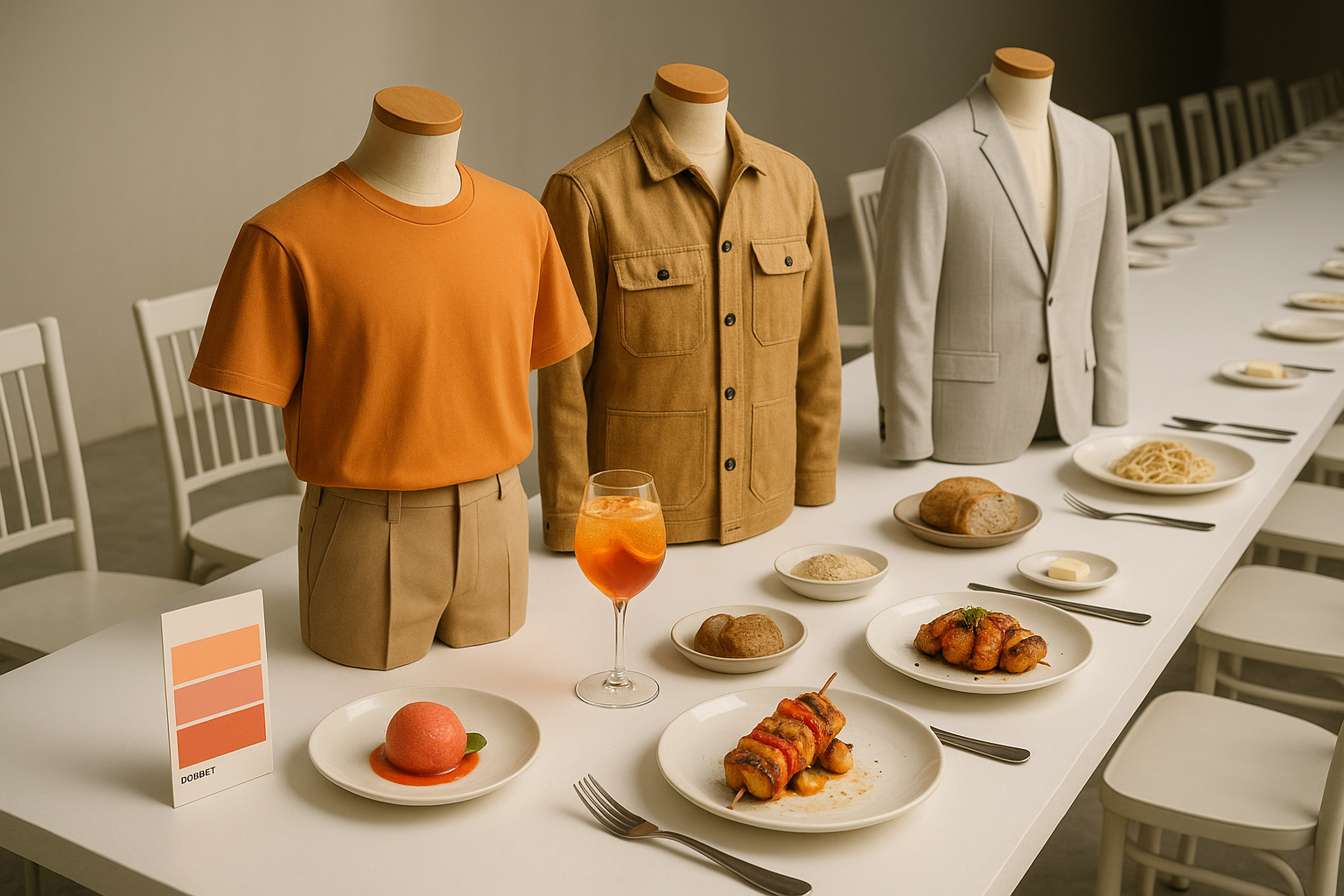
The intersection of cuisine and apparel has matured into a discipline. Instead of gimmicky cupcake bars at store openings, we’re seeing thoughtful sensory design where menus interpret cuts, weaves, and mood boards. This convergence is about coherence: aligning taste, touch, sight, and even sound to render a brand world.
Start with research. Build a lexicon that maps culinary adjectives (bright, smoky, earthy, silky) to textile attributes (lustrous, raw, nubby, crisp). From that matrix, craft a menu arc and wardrobe styling guide. Soundscapes—steaming, sizzling, or whisking—can underscore fabrication narratives like brushed wool or ripstop.
For events, flow engineering is crucial. Welcome guests with a scent-neutral foyer. Route them through small gathering nodes—oyster stations near linen suiting; tea bars by knit displays—to reduce congestion and foster discovery. Seating should accommodate content capture without blocking sight lines.
Campaign extensions convert fleeting taste into durable story. Publish a mini‑zine blending recipes, look sketches, and sourcing notes; release a short doc following the chef and designer from farm and mill to studio and kitchen. Limited drops—tea towels printed with pattern markers, spice blends named for colorways—sustain momentum.
Measure with mixed methods: ethnographic observation logs, POS data tied to QR trails, and cohort-level retention in newsletters offering seasonal recipes. Create a control market without the activation to isolate uplift. Post-event surveys should assess multisensory coherence, not just NPS.
Sustainability sits at the core. Choose regenerative farms, prioritize plant-forward menus, and specify garments made from certified fibers. Design signage explaining composting and textile recycling stations. Craft reusables—glassware, crates, mannequins—that reenter inventory rather than landfill.
Execution tips: brief staff on both vocabularies so they can translate guest questions across domains; pretest plating near garments to ensure no staining; and set backstage “no sauce” zones. With thoughtful planning, the union of palates and palettes becomes strategic brand theater that respects craft while driving measurable outcomes.