Singapore’s stages mirror its society: compact, mixed, and energetic. Early entertainment circuits featured Chinese opera, Malay bangsawan, and Indian performance lineages; later came amateur clubs staging Western plays. As the arts professionalized, funding bodies and training schools helped turn passion into sustainable practice, maturing the scene without sanding off its edges.
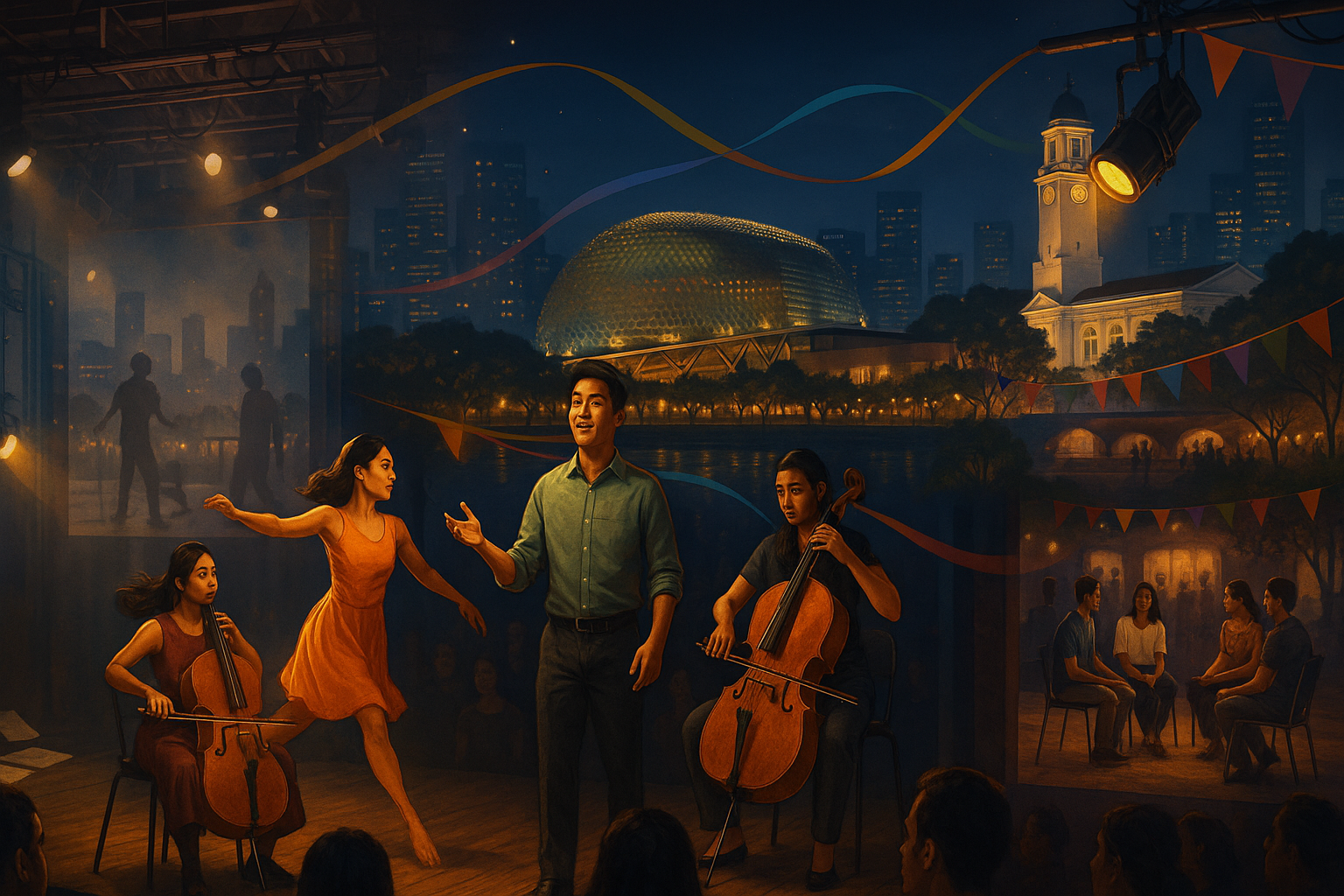
The venue ecosystem is unusually versatile. The Esplanade anchors the skyline and the calendar. Victoria Theatre pairs history with technical upgrades suitable for repertory. Drama Centre, Gateway Theatre, and KC Arts Centre cater to mid-scale shows, while black boxes at Goodman and Aliwal foster devised work, new writing, and interdisciplinary mashups.
Distinctive companies carve out editorial identities. WILD RICE advocates for Singaporean perspectives and playful retellings. The Necessary Stage conducts long-term social research through collaborative methods. SRT balances international offerings with local initiatives, including youth training. Pangdemonium excels at emotionally urgent contemporary plays. TheatreWorks supports development platforms and residencies that seed future seasons.
Festivals stitch the year together. SIFA positions Singapore within regional and global conversations, often commissioning boundary-crossing projects. The M1 Fringe prioritizes experimentation and topicality, giving emerging artists visibility. University and community festivals, while smaller, are where tomorrow’s playwrights and directors get their first shot at audiences.
Training and craft sit at the core. LASALLE College of the Arts and NAFA offer degrees in performance, design, and production; student showcases often feed directly into the professional circuit. Strong technical departments—lighting, sound, costume, stage management—mean local productions can meet demanding touring standards.
Language play is a signature. Scripts frequently toggle between English, Singlish, Mandarin, Malay, Tamil, and dialects; surtitles keep doors open. This multilingualism generates comedy, pathos, and unique rhythmic textures, while letting artists engage head-on with questions of identity, policy, and history.
If you’re planning to attend, look for content advisories, talkbacks, and accessible pricing. Pair a main-stage classic at the Esplanade or Victoria Theatre with a devised piece in a black box to experience both polish and proximity. You’ll find that Singapore’s theatre isn’t a side activity; it’s a lively commons where ideas, languages, and people meet under the lights.