From Word-of-Mouth to Viral Fame
The hawker trade has traditionally relied on reputation built over decades—a stall’s fame spreading through generations of loyal customers. The neo-hawkers are rewriting that playbook. When Hanz, a 19-year-old film student, and his friends opened Berjaya Western in Yishun, they launched with digital marketing. Their first Instagram video garnered around 250,000 views; a TikTok posted the same night hit 180,000 views within hours. “While I was working at the cashier, a lot of customers told me they came from TikTok,” Hanz told 8days.sg.
This digital-first approach is not merely a marketing tactic—it is a survival strategy. With more than 2,400 food outlets closing between January and October 2025, and 82 per cent of outlets under five years old never turning a profit, visibility is everything.
Technology in the Kitchen
The neo-hawker movement is also embracing kitchen technology in ways that would have seemed anathema to traditional hawkers. At M+ Fried Rice Paradise, Siti and Jay operate two automated woks imported from Guangzhou, each costing between S$5,000 and S$15,000. Their goal was to capture the “wok hei” taste—the smoky, charred flavour that defines great fried rice—without the physical toll of manual wok-tossing. “We managed to figure out a setting that doesn’t burn or dry out the rice, or leave it too wet,” Siti explained.
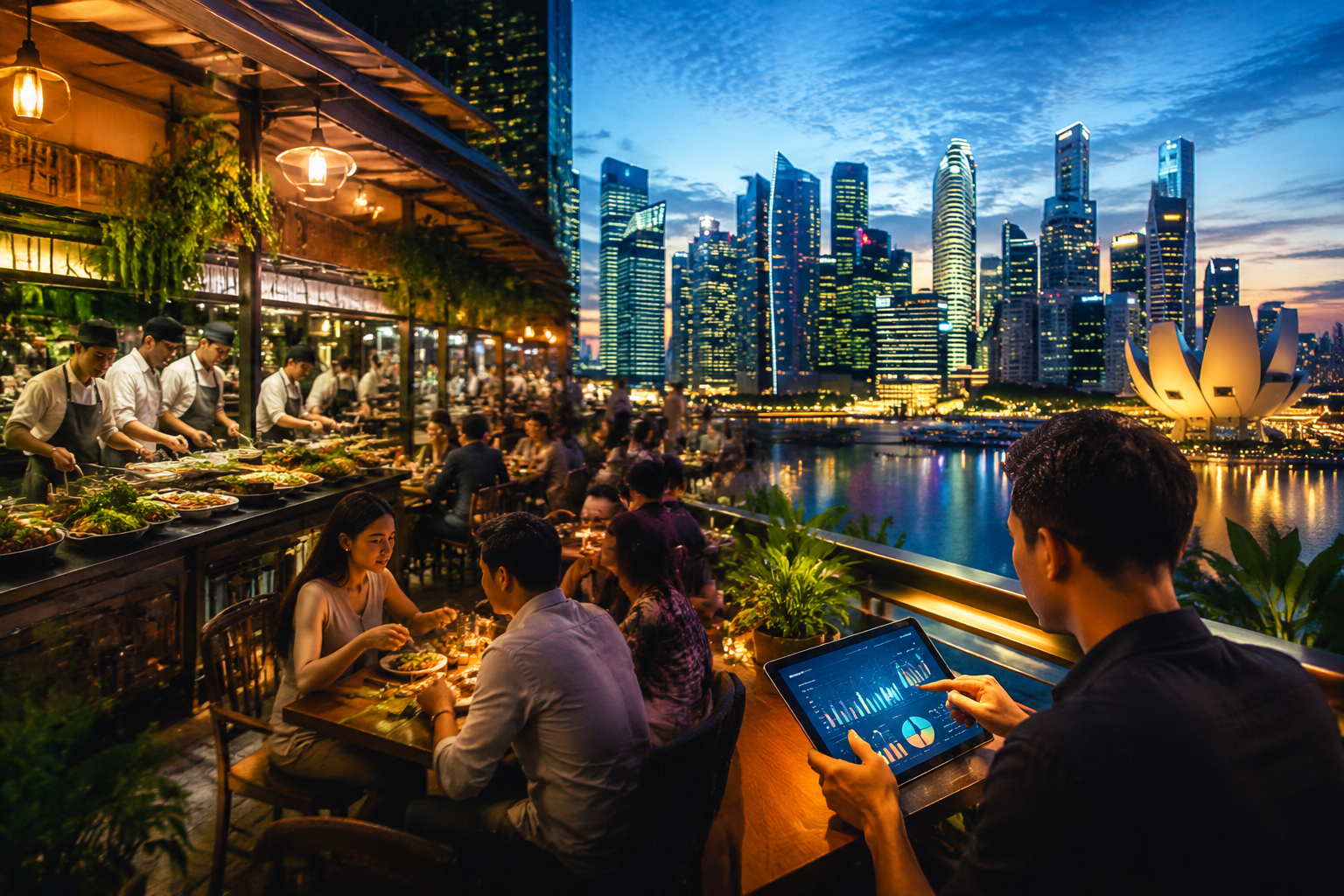
This technological adoption extends beyond cooking. Cashless payment systems, delivery platform integrations, and social media management are becoming standard tools for the new generation of hawkers. As one LinkedIn analysis observed, millennials and Gen Z operators are “using social media to build brands, cashless payments to improve throughput, and delivery platforms to extend their reach beyond four walls”.
The Physical Toll and the Digital Solution
Hawker work is famously gruelling. Debbie Yam, a third-generation hawker, works 70 sweaty hours per week. The physical demands—standing for hours, lifting heavy woks, enduring heat—are a major reason why older hawkers struggle to find successors. Technology offers a partial solution. Automated woks reduce physical strain; delivery platforms reduce the need for front-of-house staffing; social media reduces reliance on foot traffic. None of these are silver bullets, but together they make the trade more sustainable for a generation that expects work-life balance.
The Risk of Hype Over Substance
There is a danger, however, in over-relying on digital virality. As Qusyairi, Hanz’s business partner, acknowledged: “One viral video is definitely not enough. We have to keep up with trends, and our content has to be relatable to the audience”. The neo-hawker movement will ultimately be judged not by TikTok views but by whether the food is good, consistent, and worth returning for.