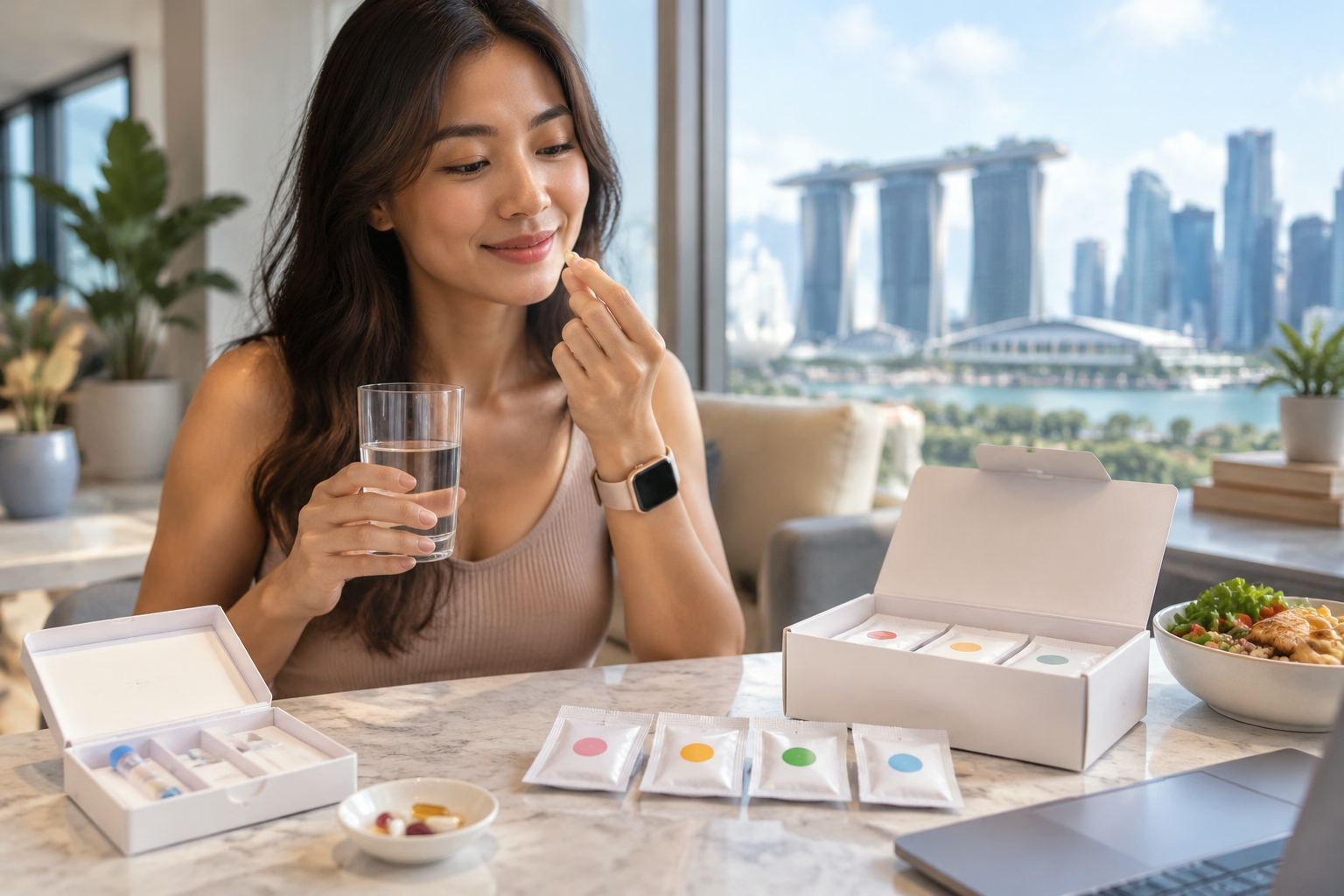
Walk into any Guardian or Watsons in Singapore, and the supplement aisle looks different than it did five years ago. Labels now proclaim “no artificial preservatives,” “non-GMO,” “vegan,” and “third-party tested.” Behind this shift is a dual force: stricter regulatory oversight from the Health Sciences Authority (HSA) and a consumer-driven clean label movement demanding full transparency.
Understanding HSA’s Regulatory Framework for Health Supplements
Unlike pharmaceuticals, health supplements in Singapore are not pre-approved before sale. Instead, HSA conducts post-market surveillance, meaning products can reach shelves quickly but are subject to random testing and enforcement. Prohibited ingredients, misleading claims, and adulteration can trigger recalls, fines, or prosecution. In 2026, HSA has increased digital monitoring of online platforms, where many non-compliant products enter the market. The agency maintains an active consumer safety portal with updated advisories and recall lists: HSA Consumer Safety – Health Supplements.
The Clean Label Shift and Third-Party Certifications
Singaporean consumers are no longer satisfied with vague terms like “natural” or “clinically studied.” They want ingredient sources, allergen disclosures, and evidence of independent testing. This has led to a rise in third-party certifications such as NSF, Informed Choice, and local halal certification for Muslim consumers. Brands that invest in transparent sourcing and batch-level testing are gaining loyalty, while those relying on marketing puffery face skepticism.
Enforcement Actions and 2026 Case Examples
In early 2026, HSA reported seizing thousands of units of illegal sexual enhancement and weight-loss supplements sold via social media. Several products were found to contain undeclared sibutramine and tadalafil, posing serious health risks. These cases reinforce the need for consumers to purchase only from reputable retailers and to verify that products have proper labels with batch numbers and manufacturer details. HSA’s public database allows users to check whether a product has been flagged or recalled.
What This Means for Responsible Brands
For supplement companies, compliance is no longer optional—it is a competitive advantage. Brands that proactively share lab reports, avoid exaggerated claims, and respond to consumer questions are thriving. The cost of third-party testing is rising, but it builds trust in an increasingly crowded market. Retailers are also curating their shelves, preferring products with clean labels and verified safety profiles.
The convergence of tighter regulation and consumer demand for transparency is reshaping Singapore’s supplement industry into a more accountable and trustworthy space.