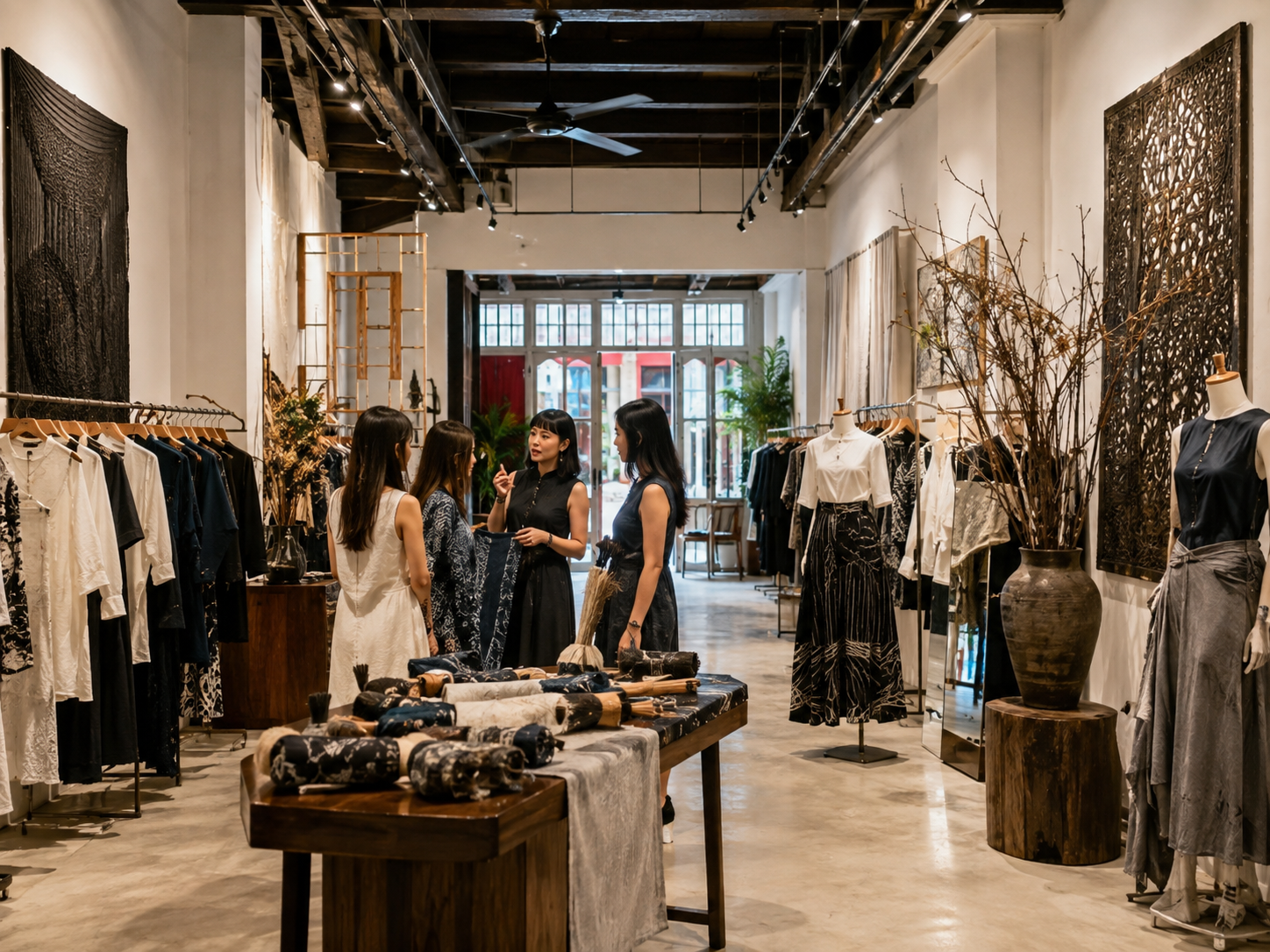
Singapore’s multicultural fabric has always been a source of inspiration, but a new cohort of independent designers is elevating heritage motifs beyond costume into high-fashion relevance. By reinterpreting the kebaya, cheongsam, and batik for daily wear, these labels are crafting a unique sartorial language that speaks to both local pride and global appeal.
Modernising the Kebaya
At the forefront is Ratianah, a boutique label that specialises in the kebaya, a traditional blouse-dress with roots in Peranakan and Malay culture. Instead of rigid brocade and heavy embroidery, Ratianah’s 2026 collection employs laser-cut organza and lightweight cotton-linen blends, making the kebaya suitable for a boardroom meeting or a wedding dinner. The brand’s founder, herself a third-generation kebaya tailor, conducts public workshops on the art of the kebaya, ensuring that the garment evolves without losing its soul.
Multicultural Prints as a Unifying Theme
Print-heavy boutique brands are also flourishing. Noel Caleb, for example, draws from the designer’s Eurasian and Chinese heritage to create conversational prints featuring chilli crab motifs, orchid bouquets, and vintage kopitiam tiles. These designs have proven popular with both locals and tourists seeking a wearable piece of Singapore’s cultural narrative. A 2026 feature in Tatler Singapore spotlighted how such “storytelling prints” have become the signature of a new generation of designers who want to differentiate themselves from bland international fast fashion (source: https://sg.asiatatler.com/). The article noted that pieces from these collections often sell out within days of release, fuelled by social-media posts that emphasise cultural meaning.
Batik and Beyond: Southeast Asian Textiles
Brands like Time Taken to Make a Kebaya are pushing regional collaborations, sourcing hand-stamped batik from Pekalongan and weaving communities in Nusa Tenggara Timur. The resulting garments are not fusion in a superficial sense; they are contemporary designs built entirely on ancestral textile knowledge. Each sale includes a card detailing the fabric’s origins and the artisan’s name, transforming the purchase into an act of cultural preservation.
This heritage-driven approach does not feel nostalgic; it feels timely. In a globalised world, Singapore’s boutique designers are showing that identity and innovation can coexist beautifully on the same garment.