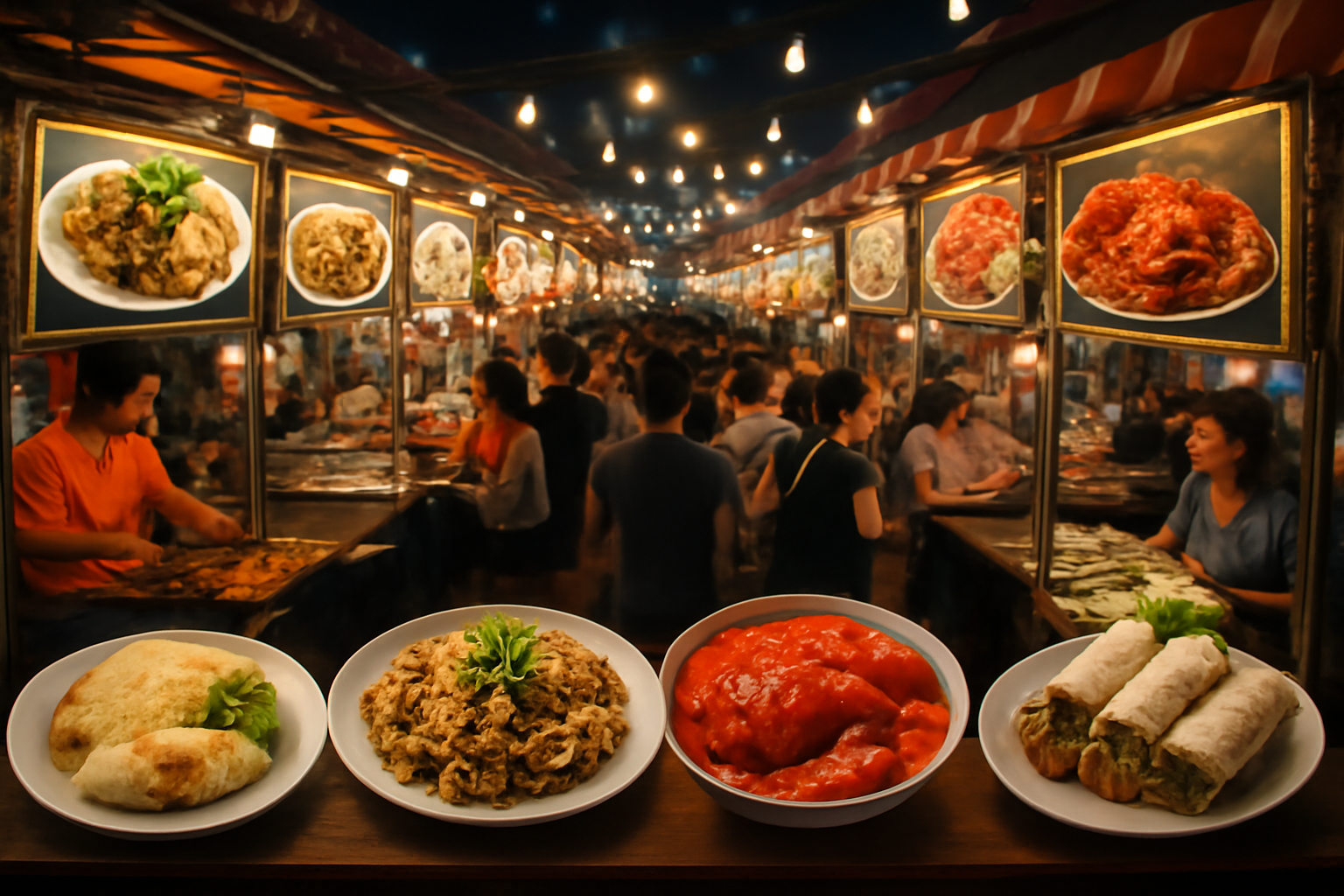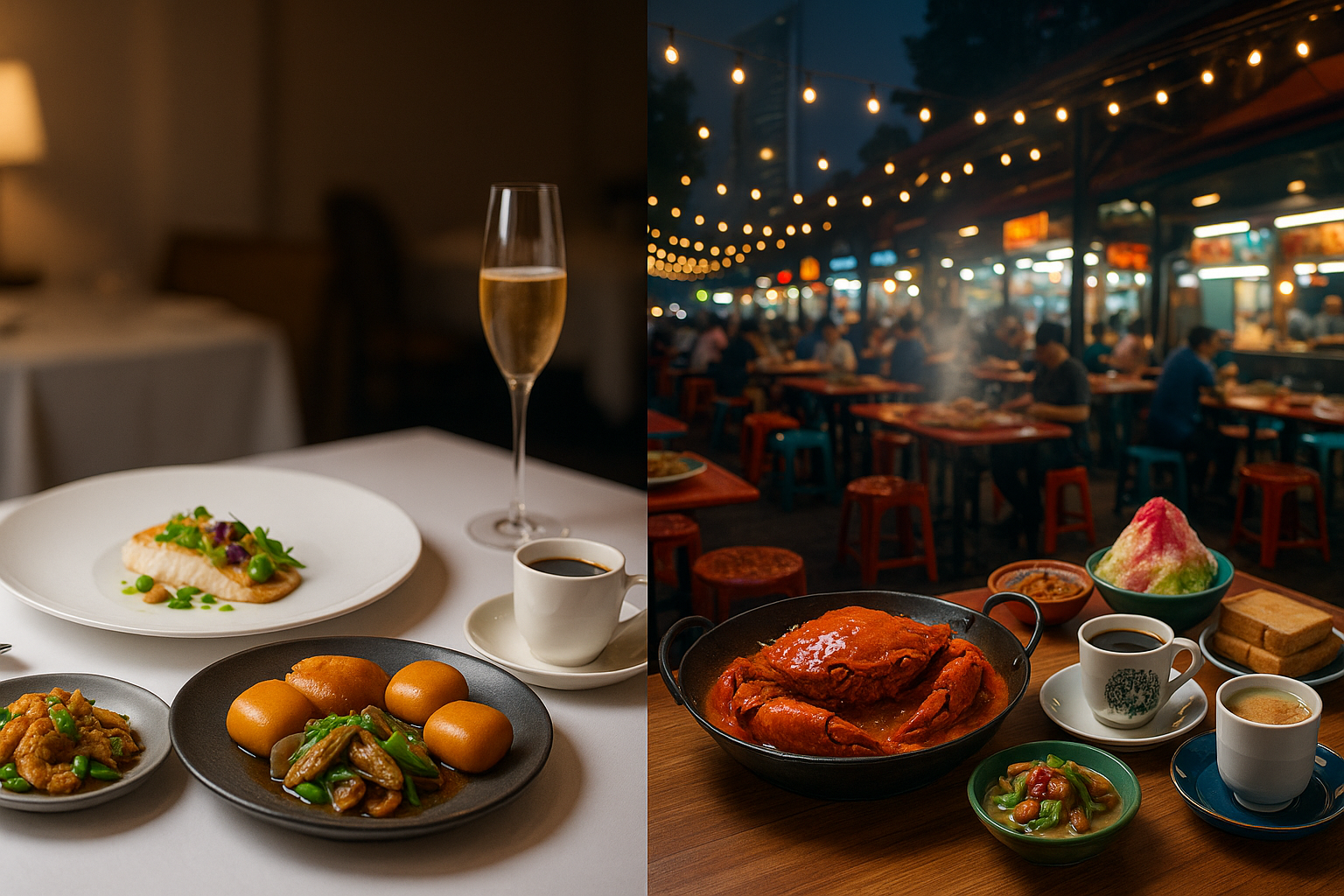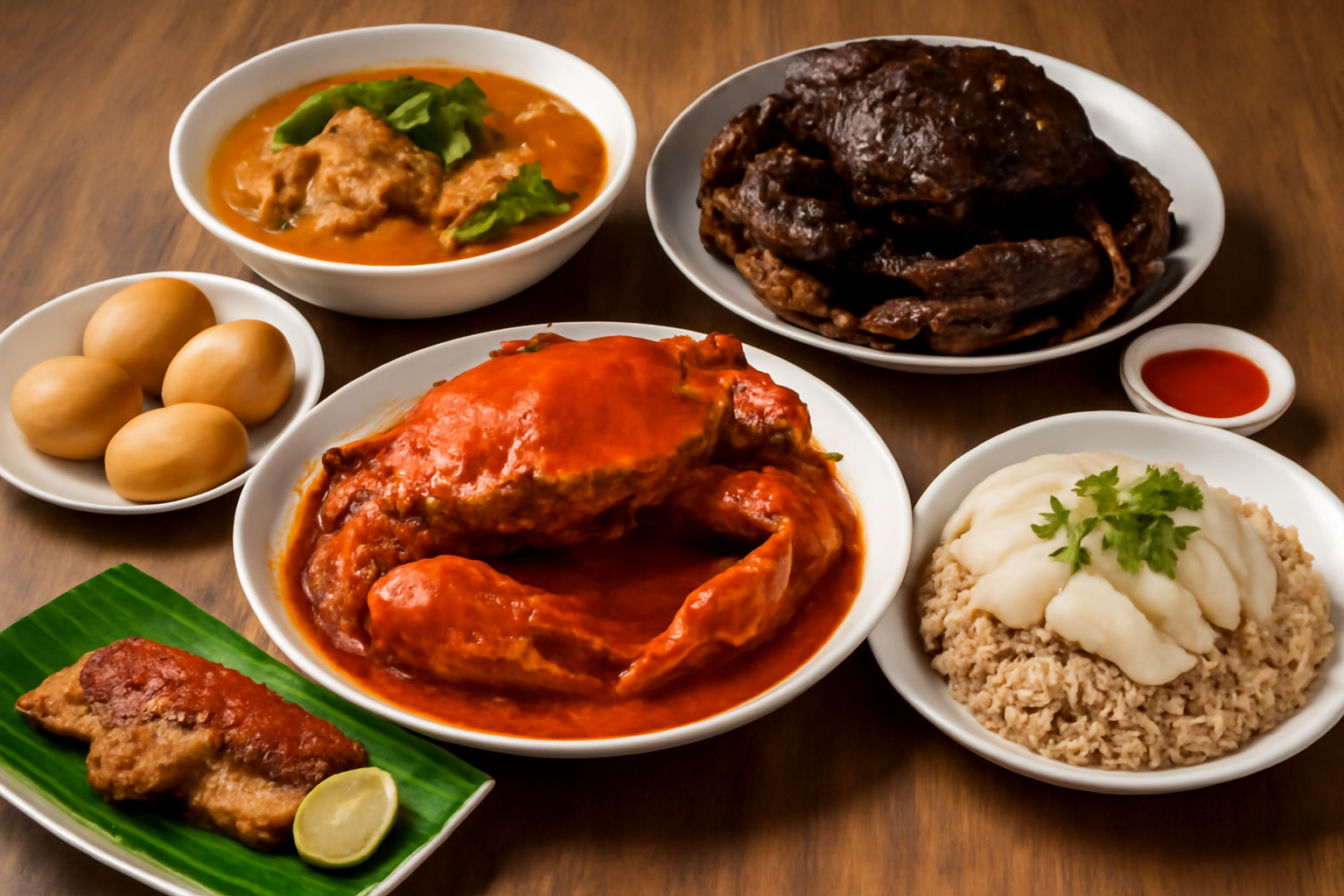
Singapore’s street food scene is one of the strongest reasons travelers visit the country. Although Singapore is modern and urban, its hawker food culture remains deeply traditional. Many recipes have been passed down through families, adapted by migrant communities, and refined over decades. This is why a simple meal at a hawker centre can feel like a journey through history, culture, and flavor.
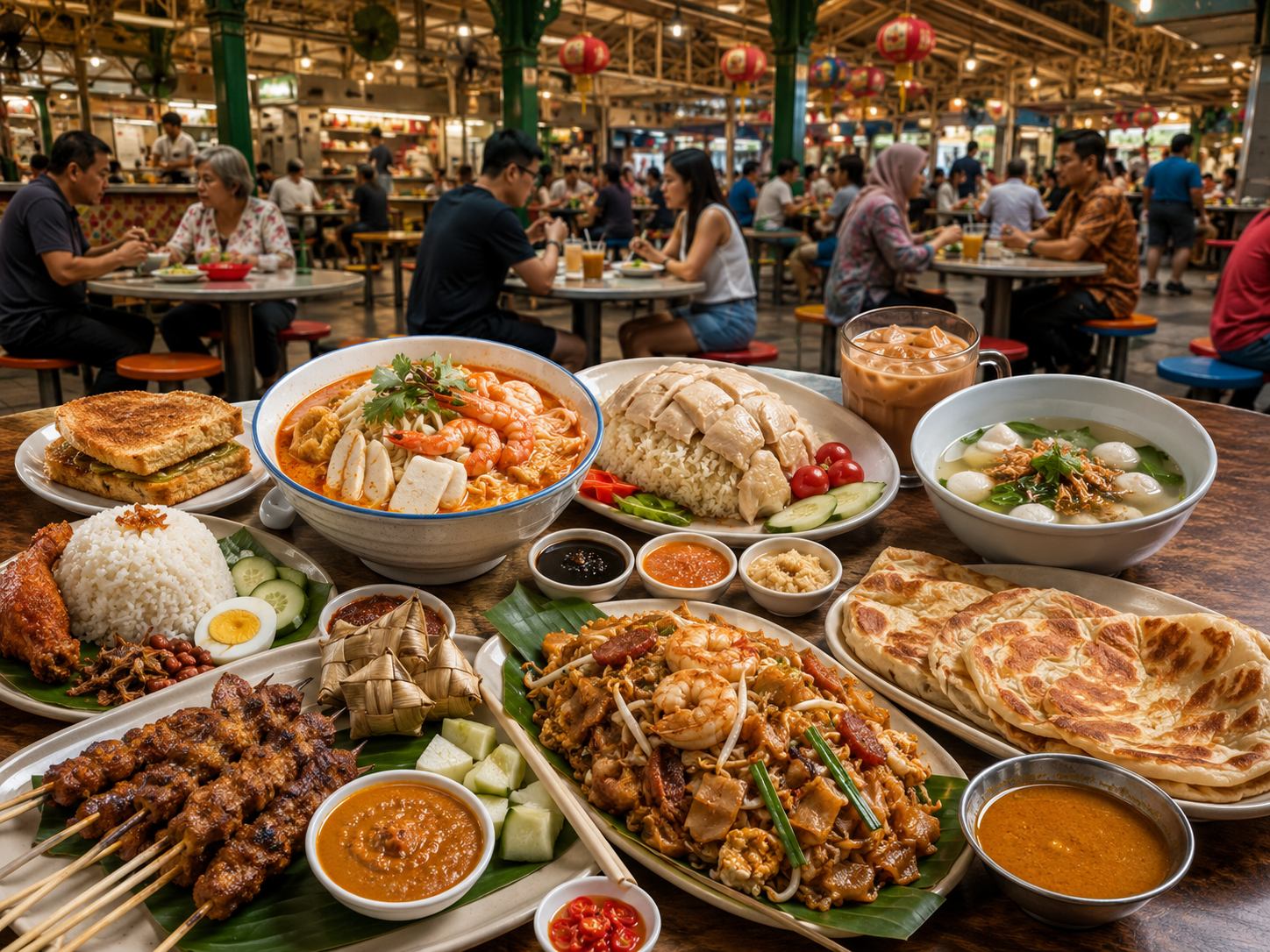
Satay is a dish that immediately attracts attention because of its smell. Thin skewers of marinated meat are grilled over hot charcoal until the outside becomes slightly crisp while the inside stays juicy. Chicken satay is common, but beef and mutton versions are also widely enjoyed. The marinade often includes turmeric, garlic, shallots, and other spices, giving the meat a golden color and aromatic taste. The peanut sauce is just as important as the meat itself. It is thick, slightly sweet, and mildly spicy, creating a perfect contrast with the grilled skewers.
Laksa is another essential dish for anyone exploring Singaporean street food. It is a noodle soup with a rich broth made from coconut milk and spice paste. Katong laksa, one of the most famous local versions, is known for its short rice noodles and creamy soup. The dish usually includes prawns, fish cake, cockles, and bean sprouts. Its flavor is layered: spicy from chili, savory from dried shrimp, creamy from coconut milk, and fragrant from herbs such as lemongrass. Laksa is filling, comforting, and full of cultural meaning.
Hainanese chicken rice is often described as one of Singapore’s signature dishes. It may seem simple, but its quality depends on technique. The chicken should be smooth and tender, while the rice must be fragrant and rich without being oily. The sauces are also important. Chili sauce gives heat, ginger sauce adds sharpness, and dark soy sauce provides sweetness and depth. Together, they create a balanced meal that is loved by locals and visitors alike.
Another dish that deserves attention is nasi lemak. Originally associated with Malay cuisine, nasi lemak includes coconut rice served with sambal, fried anchovies, peanuts, cucumber, egg, and sometimes fried chicken or fish. The sambal is the heart of the dish, combining chili heat with sweetness and umami. In Singapore, nasi lemak can be found in hawker centres, food stalls, and even modern cafés.
Char kway teow is a strong example of Chinese-influenced hawker cooking. Flat noodles are stir-fried with soy sauce, egg, bean sprouts, Chinese sausage, and seafood. The dish is rich, smoky, and satisfying. A skilled hawker must control the heat carefully so the noodles absorb the sauce without becoming too soft.
Street food in Singapore also includes lighter snacks and breakfast items. Kaya toast, served with butter, coconut jam, soft-boiled eggs, and local coffee, is a classic morning meal. Carrot cake, made from radish cake rather than carrots, is stir-fried with egg and garlic for a savory snack.
What makes Singaporean street food remarkable is not only taste, but also accessibility. In one hawker centre, diners can experience multiple cultures through food. Satay, laksa, chicken rice, and many other dishes reveal how Singapore’s diverse communities have created one of the world’s most exciting food traditions.