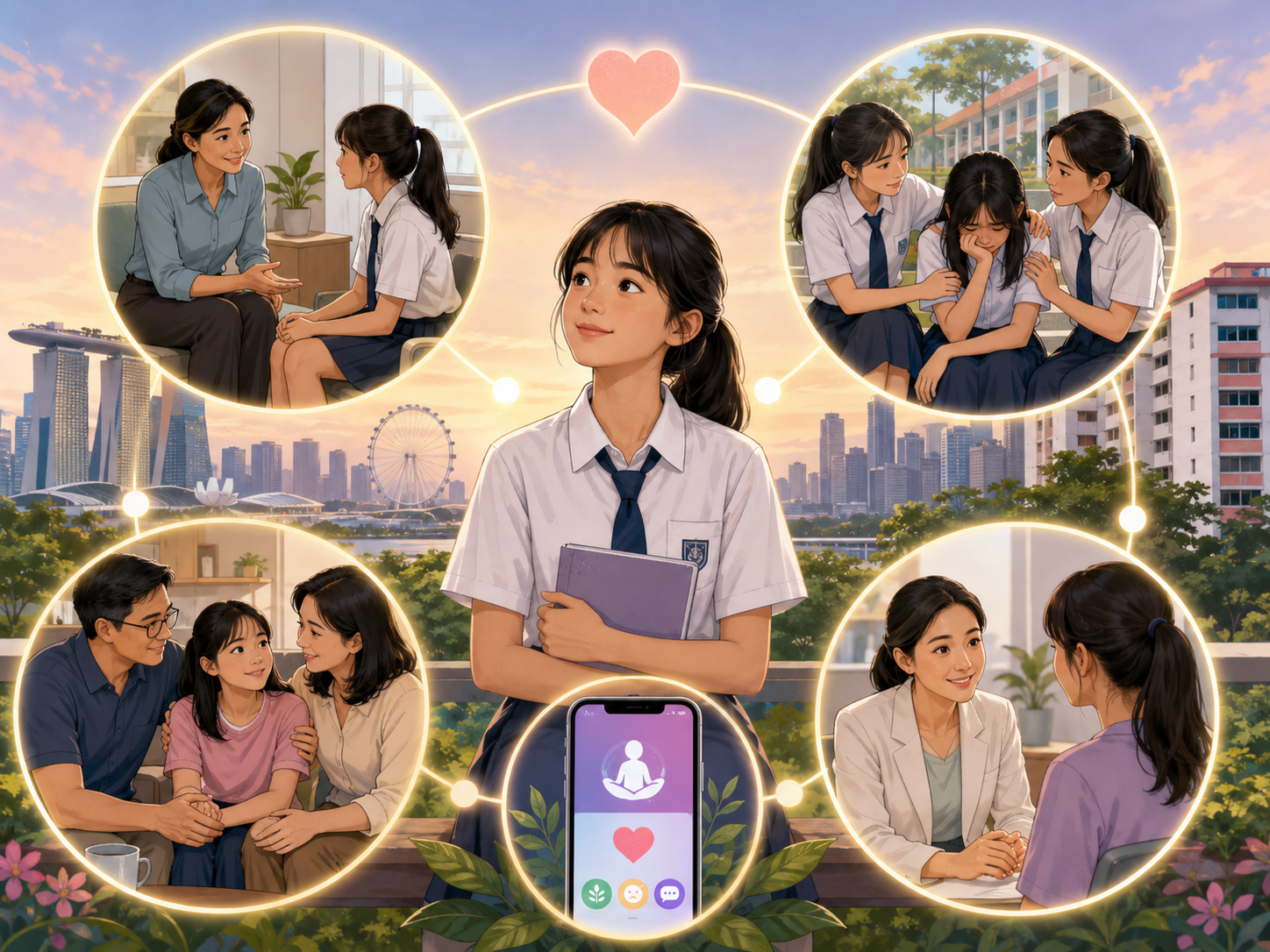
Teenagers in Singapore grow up in a fast-moving and highly competitive environment. Many manage schoolwork, examinations, co-curricular activities, family expectations, friendships, and digital pressures at the same time. These demands can build resilience, but they can also contribute to anxiety, depression, burnout, loneliness, or low self-worth. Recognising this, Singapore has placed stronger focus on mental health programmes and policies for young people.
One of the most practical areas of action is the school environment. Schools are not only places for academic learning; they are also places where emotional struggles often appear first. Singapore has expanded support through school counsellors, teacher awareness, peer support systems, and mental well-being education. Students are encouraged to learn coping skills, communicate emotions, and understand when they should seek help.
Teacher involvement is especially important. A teenager may not always approach a counsellor directly, but a teacher may notice changes such as isolation, irritability, tiredness, declining grades, or loss of interest. When teachers are equipped to respond with care rather than punishment, they can help students receive support earlier.
Peer support programmes add another protective layer. Young people often confide in friends before adults. By training peer supporters to listen, show empathy, and refer serious concerns to trusted adults, schools create a more supportive student culture. This is valuable because many teenagers hide their struggles out of fear that they will be judged.
Beyond schools, Singapore has developed services that focus on early intervention. REACH supports students with emotional and behavioural concerns through collaboration between mental health professionals, schools, and families. This model is useful because it avoids placing all responsibility on one party. A teenager’s well-being depends on what happens in class, at home, online, and within the wider community.
Youth-focused services such as CHAT have also helped make mental health support more approachable. For many adolescents, visiting a psychiatric clinic can feel intimidating. Youth-friendly mental health checks and guidance can reduce fear and encourage earlier help-seeking. Early support can prevent mild or moderate difficulties from becoming more serious.
National policy has also moved toward a broader and more coordinated system. Singapore’s National Mental Health and Well-being Strategy, introduced before August 2025, emphasised prevention, early care, community-based support, and reducing stigma. For teenagers, this means mental health should be addressed not only in hospitals but also in schools, primary care, community spaces, and online platforms.
Digital tools are increasingly relevant. Many teenagers first search online when they feel anxious, sad, or confused. Platforms such as mindline.sg provide accessible information, self-help resources, and pathways to further support. While online resources cannot replace therapy or medical care, they can help young people understand their feelings and take the first step toward help.
Anti-stigma work remains essential. Campaigns like Beyond the Label challenge harmful stereotypes about mental health conditions. Stigma can be especially damaging for teenagers because they may fear exclusion or gossip. When mental health is discussed openly, students are more likely to support friends and seek help for themselves.
Parents also need to be part of the solution. Some teenagers suffer quietly because they fear disappointing their families. Parent education can help adults respond with empathy, recognise warning signs, and balance expectations with emotional support. Singapore’s youth mental health efforts are strongest when schools, families, healthcare providers, and communities work together. The aim is not only to treat mental illness, but to create an environment where teenagers can grow with confidence, connection, and emotional safety.